Uncategorized

A Tribute to Lava

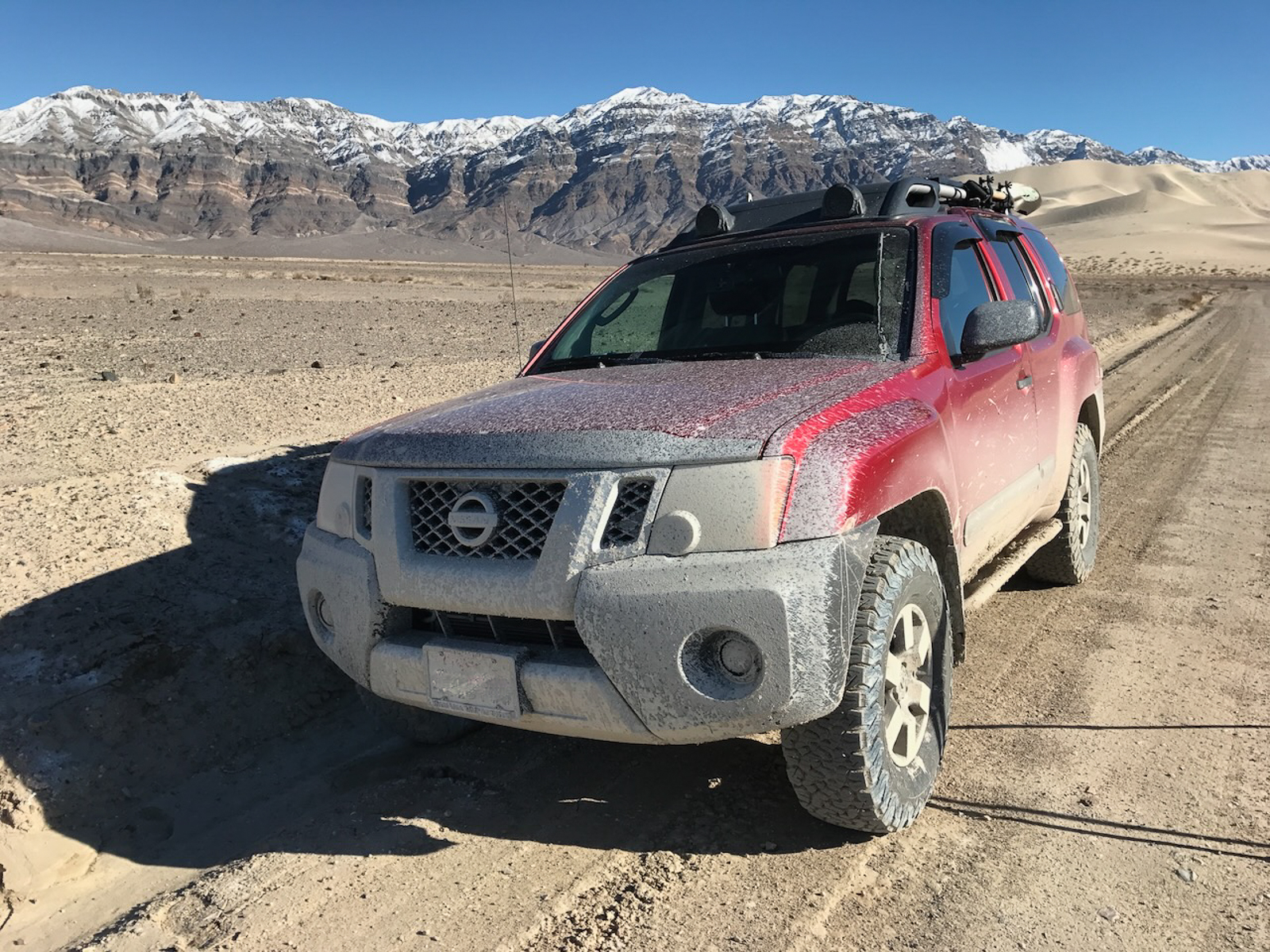
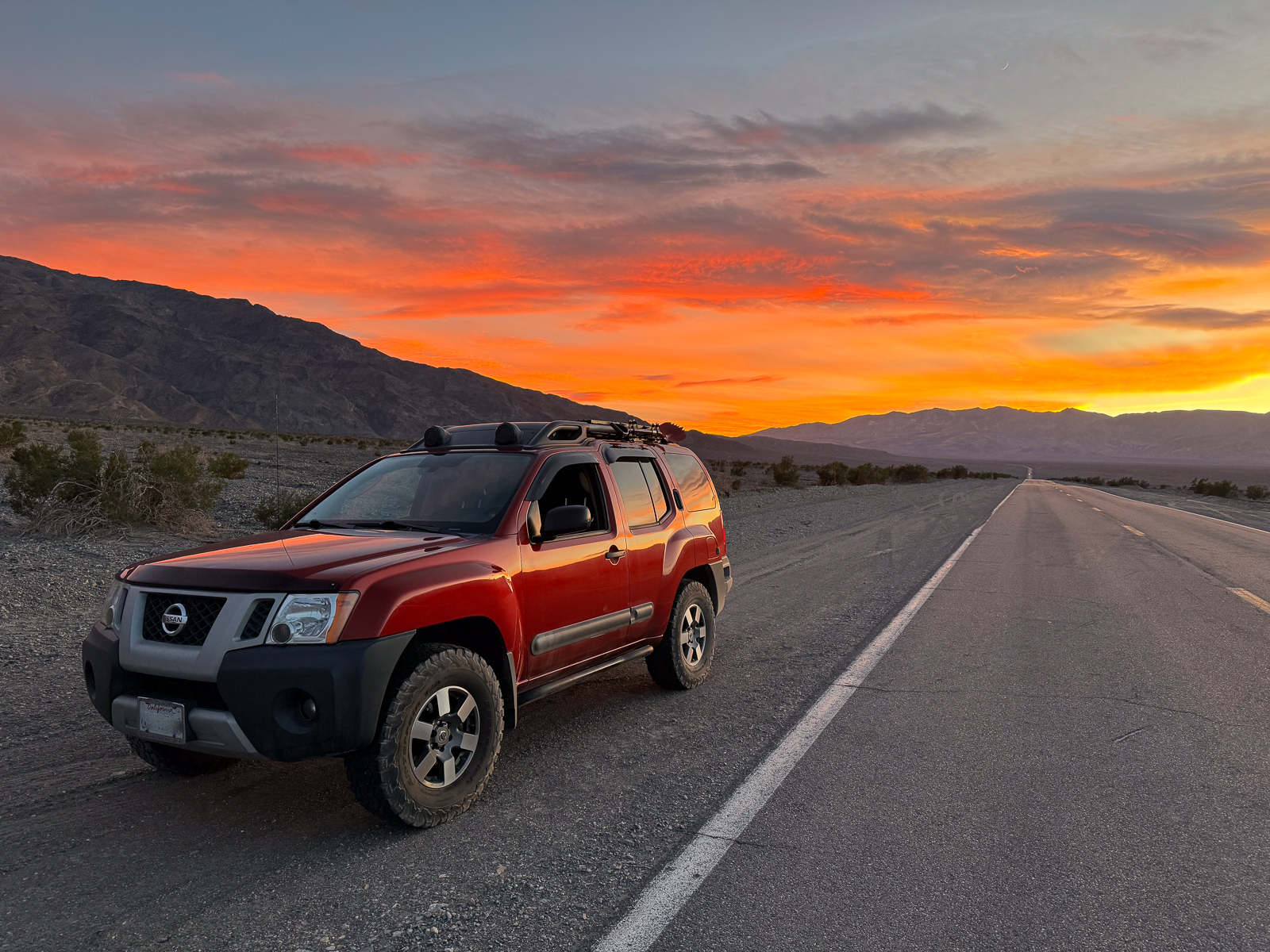
red nissan xterra in death valley
Lava, the Photo-Mobile

In March of 2011, I said goodbye to my trusty college car, a 2000 Toyota Corolla, and said hello to the future. Just 16 days after I picked up the keys, I headed to my favorite Death Valley National Park and took this photo to commemorate the new era ahead. I captioned it “The hope is that these wheels will take me to places that the little Corolla could not, and in this inaugural road trip it did just that.” My first brand new car was a maxed out Nissan Xterra Pro 4X. It had 60 miles on the odometer. It featured part time four wheel drive, bilstein shocks, an electronic locking rear differential, and a built in roof rack. Inside it had the premium sound system and leather seats. And it fit me like a glove. The color was “lava red” and I quickly named the car Lava as I have an affinity for volcanoes.
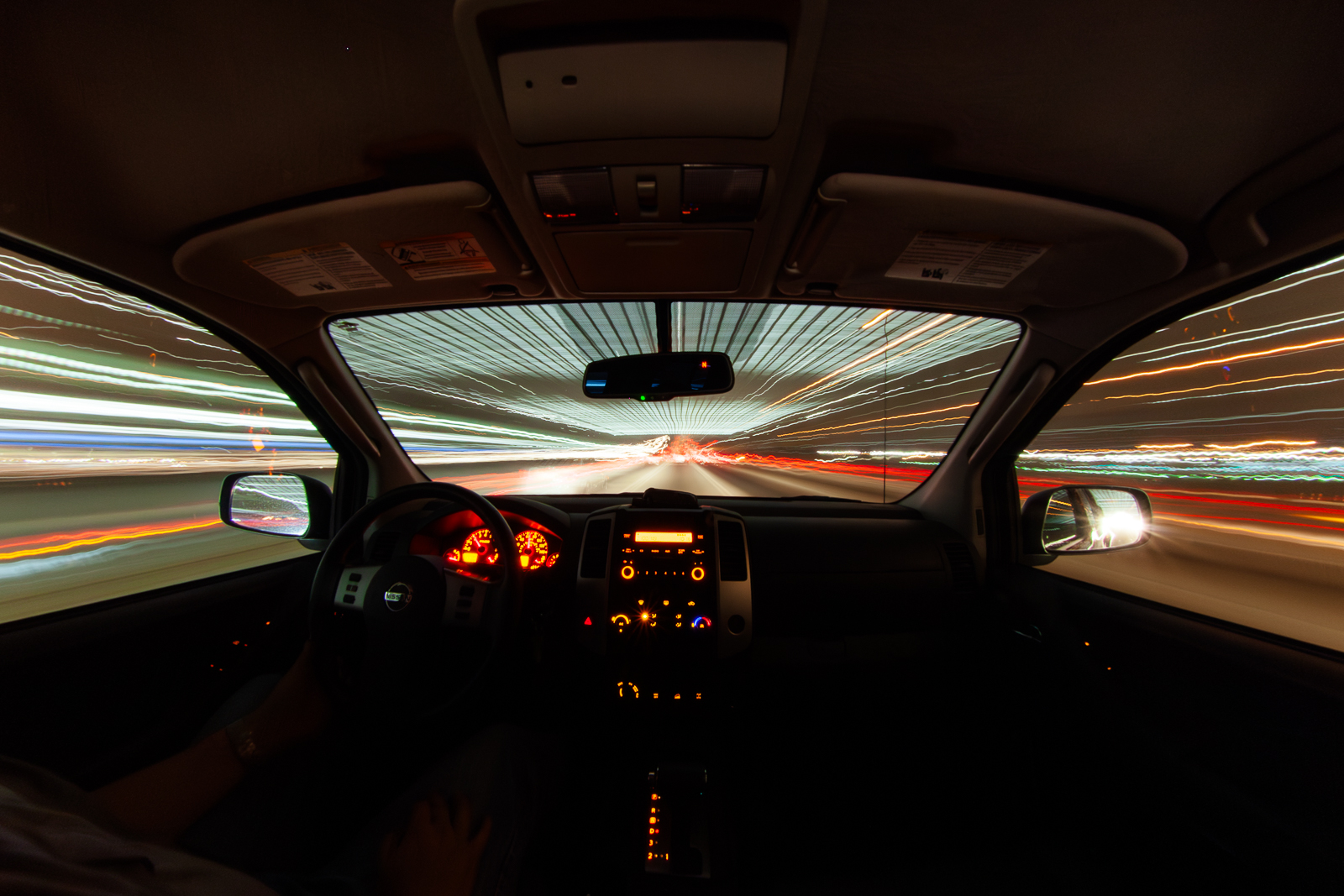
Warp Speed

The fiery theme was echoed by the console. All the lights on the inside were amber hued. I was enthralled by this new machine that could take me places I had only dreamed of going before from my time in the flat lands of Indiana in my corolla.
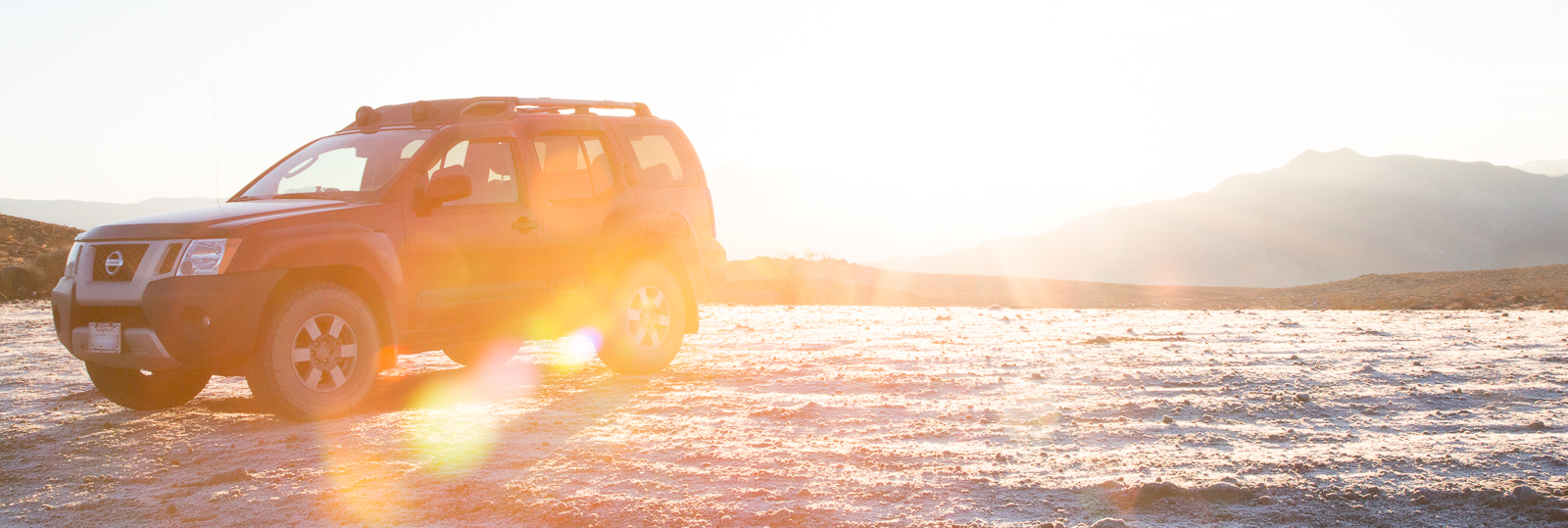
nissan xterra backlit by the sun
The future was bright
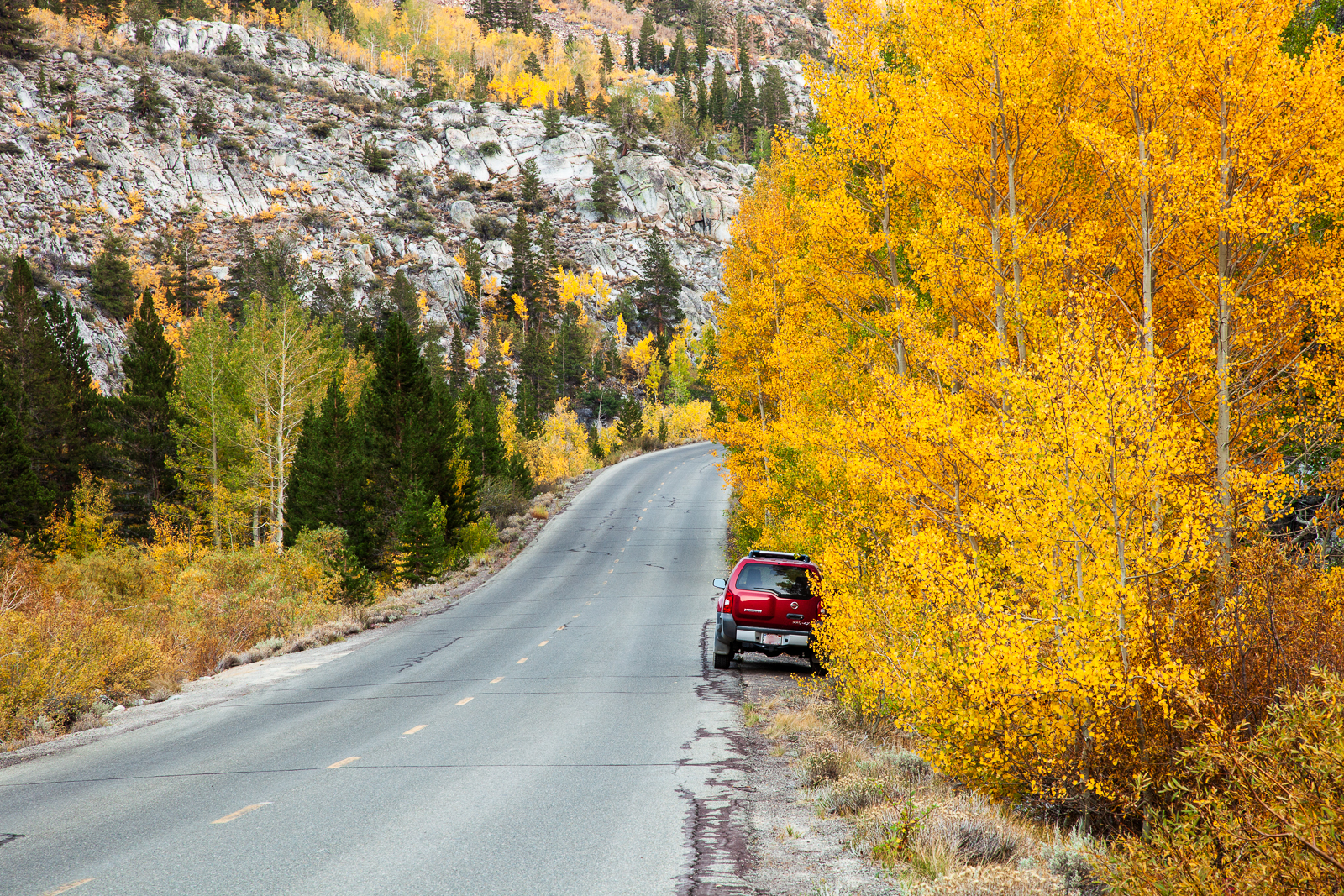
xterra on the side of a mountain road with towering golden aspen trees
Chasing Fall Color in the Eastern Sierra

In the first two years I explored all over Death Valley National Park, including my first visit to Saline Valley in 2012.Slowly I broadened my horizons. In 2013 I purchased steel rock sliders from White Knuckle Off-Road. I then went on a road trip 10,000 miles across the country, visiting national parks all over and visiting family back in Indiana. Along that trip I hit 40,000 miles in Grand Teton National Park.

spedometer hitting 40000 miles in Grand Teton National Park
Grand Teton 40k

Slowly over time I made additional modifications. When I wore out my stock suspension, as evidenced by bottoming out just driving on city streets, I upgraded to an Old Man Emu suspension which lifted about 1.5 to 2 inches all around. I had roof rack mounts for my Hi-Lift jack and a shovel.
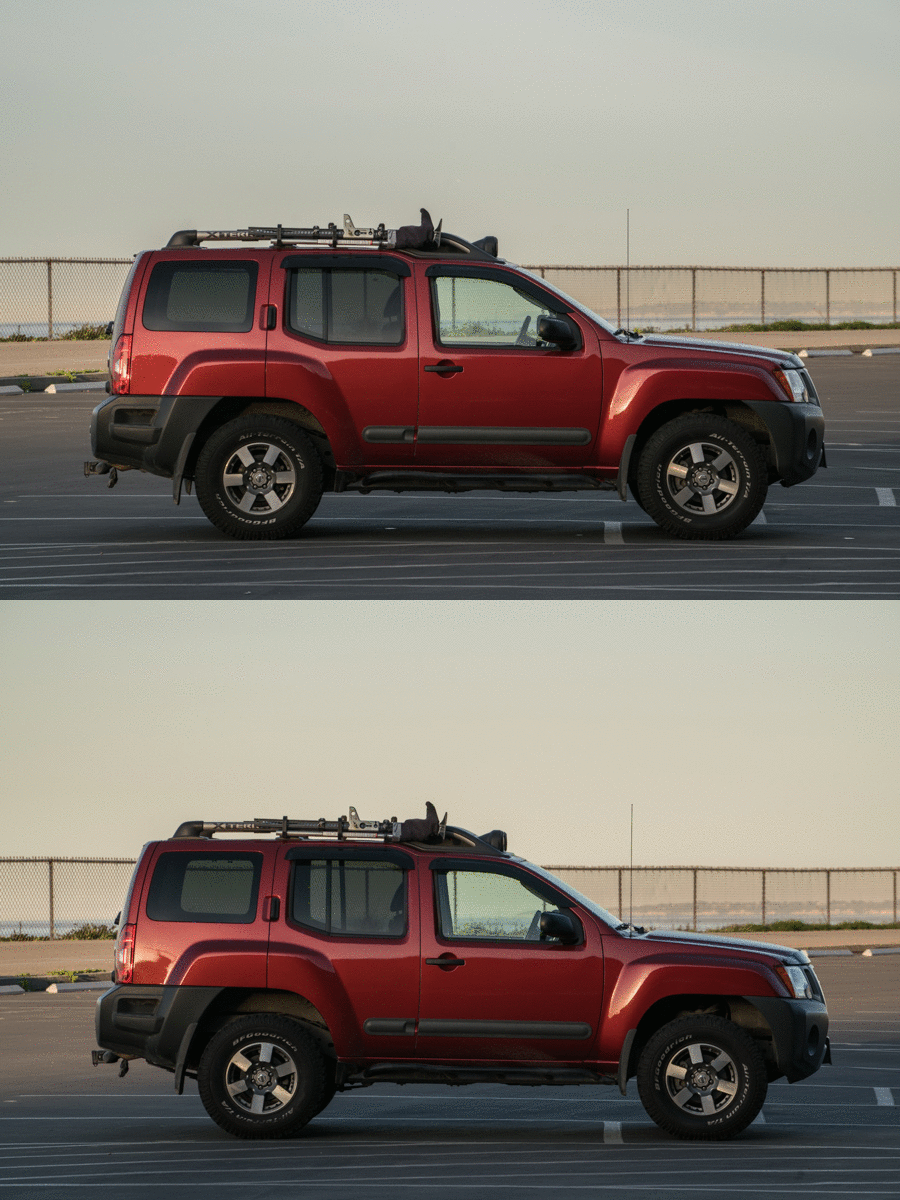
xterra suspension lift animation
Before and after Old Man Emu upgrade
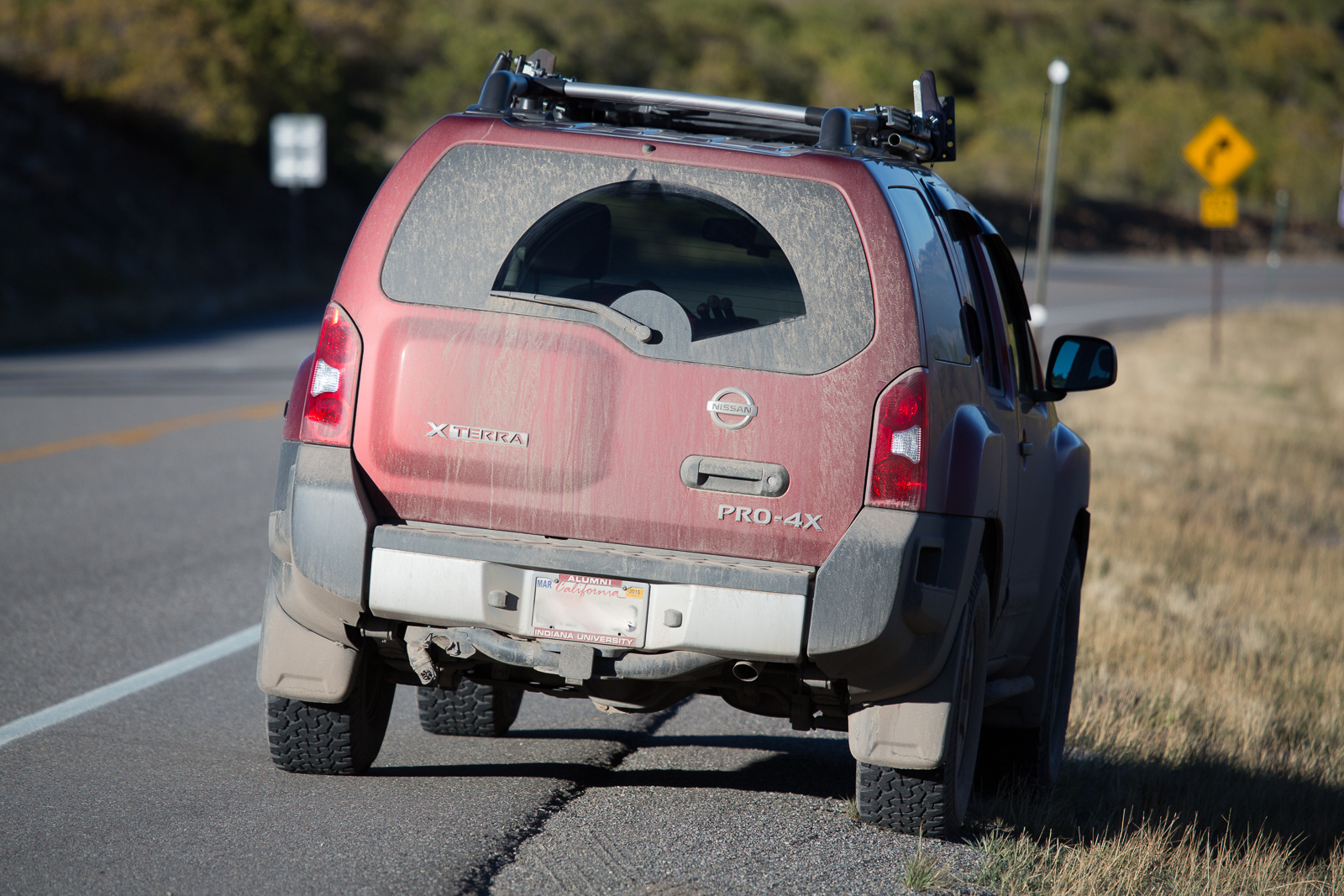
a very dirty nissan xterra
Never afraid to get dirty
xterra with stormy mountains behind
Death Valley Exploring

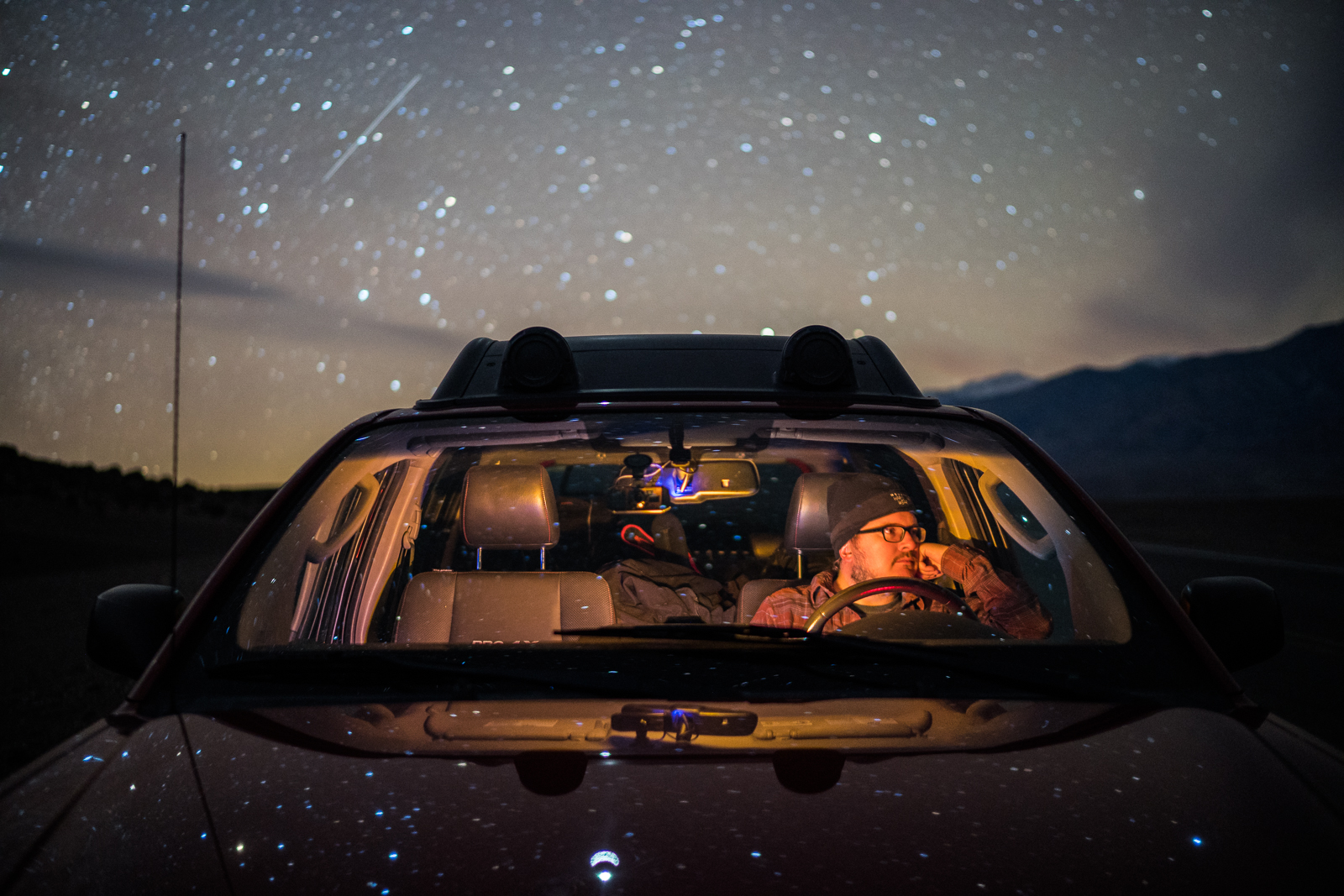
One of the biggest game changers for me was that the Xterra allowed me to sleep in the car. For my solo photography missions, this meant that I could just get up and go fast and that I could really sleep anywhere I could get my car to. So many photographic possibilities opened up as a result.

me with the xterra at night with a half moon and stars
Death Valley time lapsing at night

One of the neat quirks about the Xterra was that one of these Rubbermaid Action Packer boxes perfectly extended the rear folded down seat in addition to providing a bunch of storage. This was a perfect sleeping platorm extension.
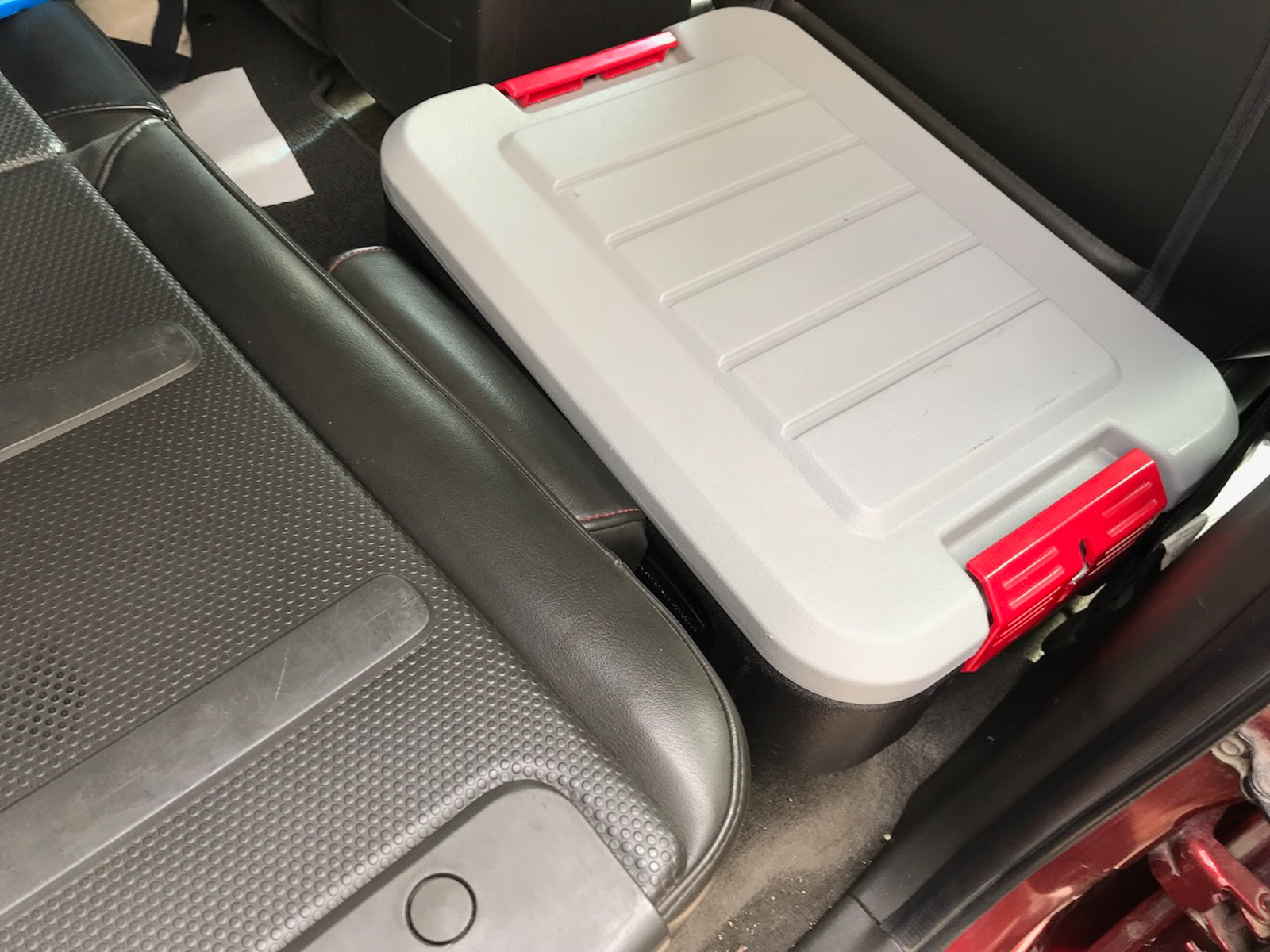
rubbermaid box with folded down seats
Sleeping platform
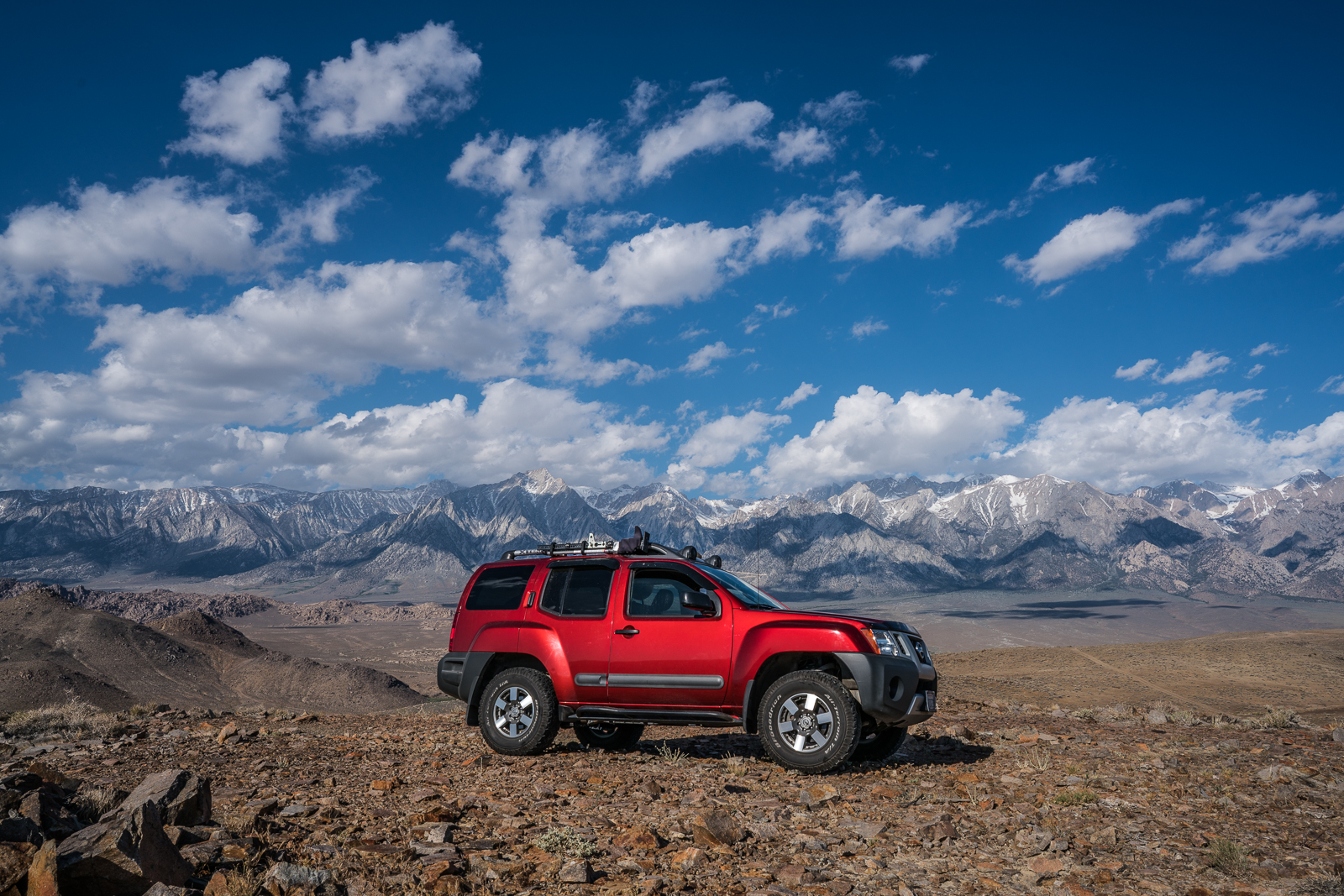
xterra on top of the alabama hills in california wit the sierra nevada mountains behind
Conquering the Alabama Hills with the Sierra Nevada backdrop

Everywhere I asked Lava to take me, she took me without complaint and with expert capability.
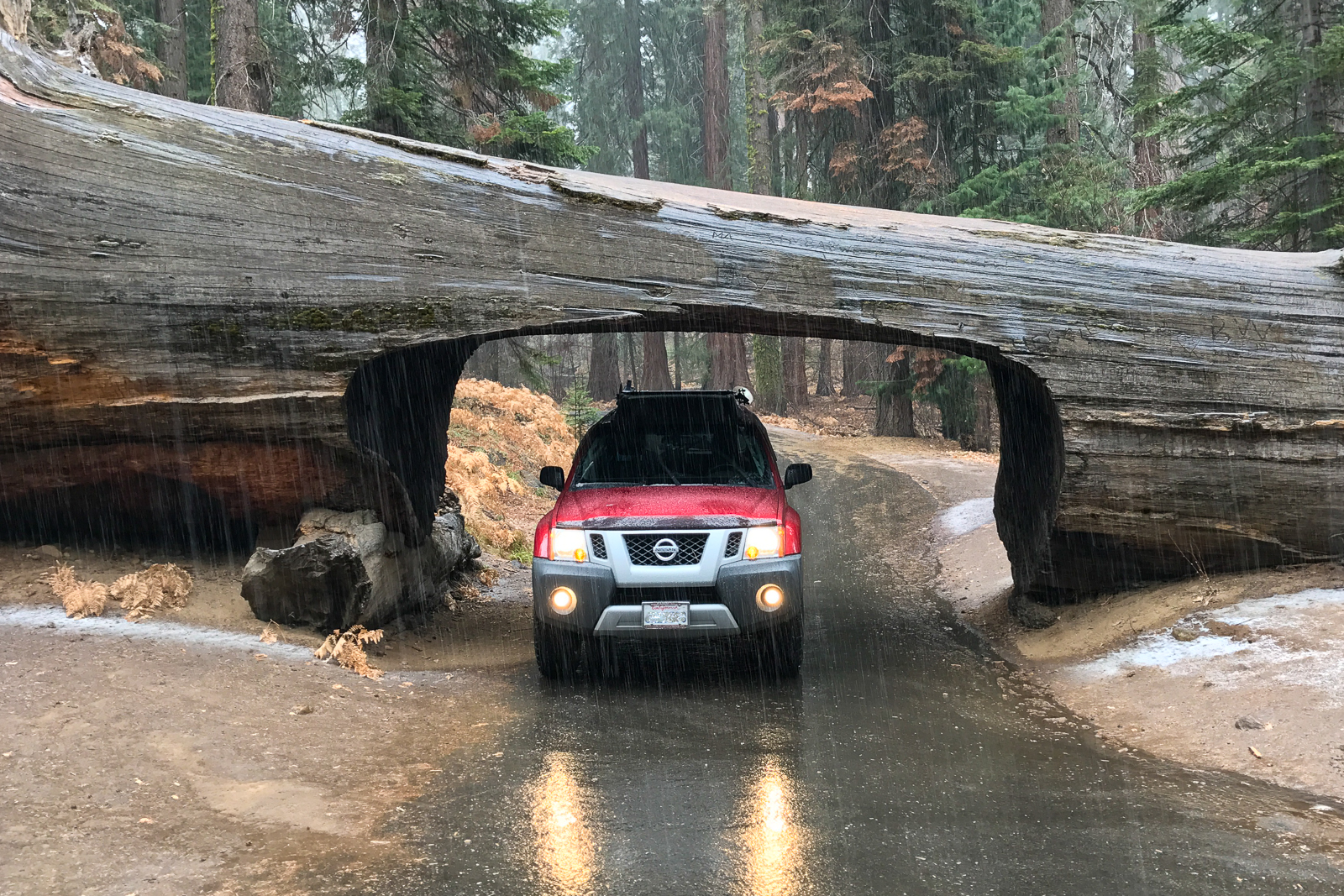
Xterra in a tunnel cut from a fallen redwood
Driving through a redwood
dirt covered xterra in eureka valley, california
Lava trying to adopt camouflage in Eureka Valley

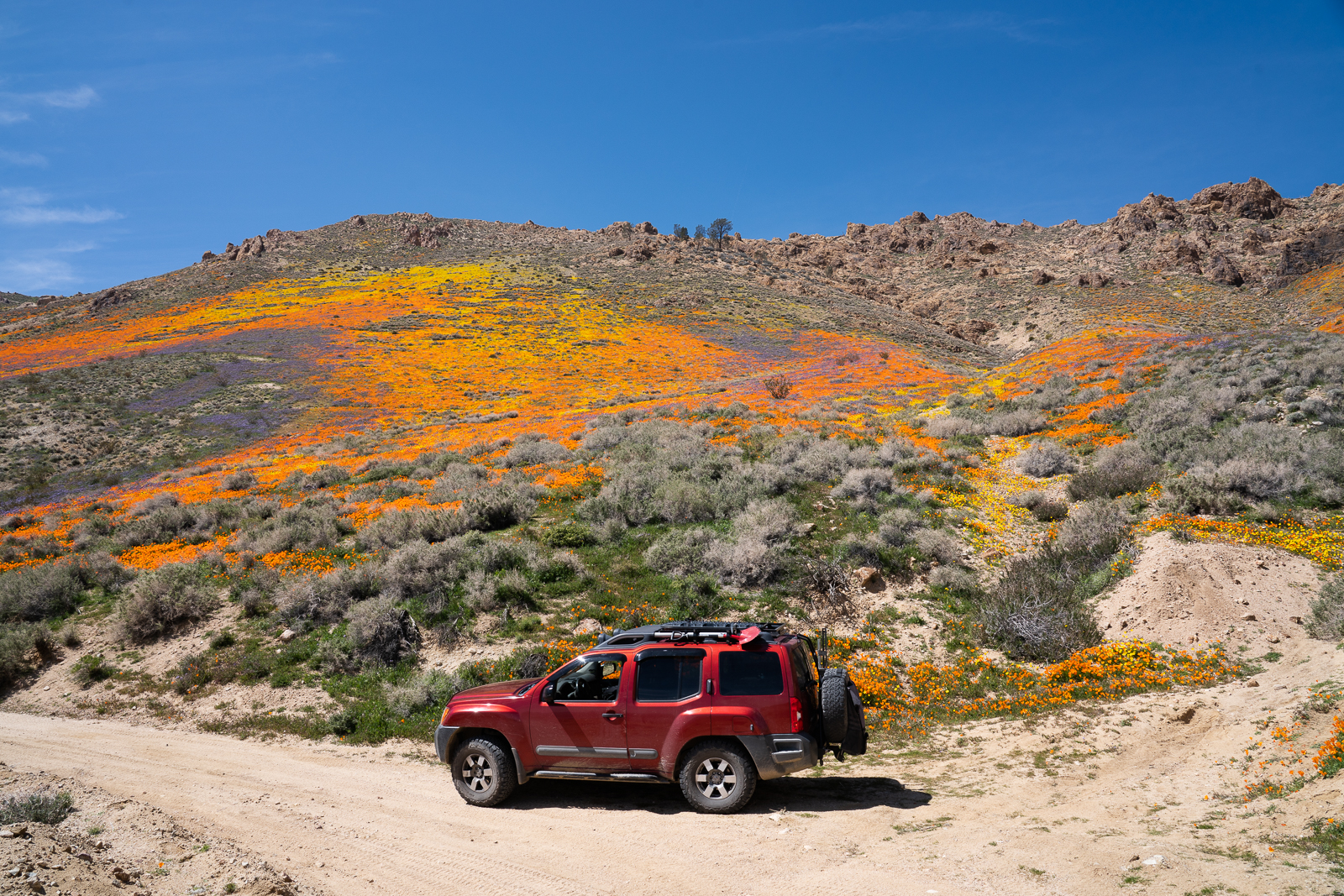
By the time I hit 100,000 miles in 2017 while photographing a superbloom of wildflowers, I had replaced the rear bumper with a heavy duty Shrockworks one with a spare tire carrier, and I had installed a ladder on the back and a roof basket on top. For my solo adventures deep into the desert i could carry two full size spare tires. I could climb up onto the roof and take photos from an elevated position, which had been a long time goal. For the exterior, my modifications were nearly complete.
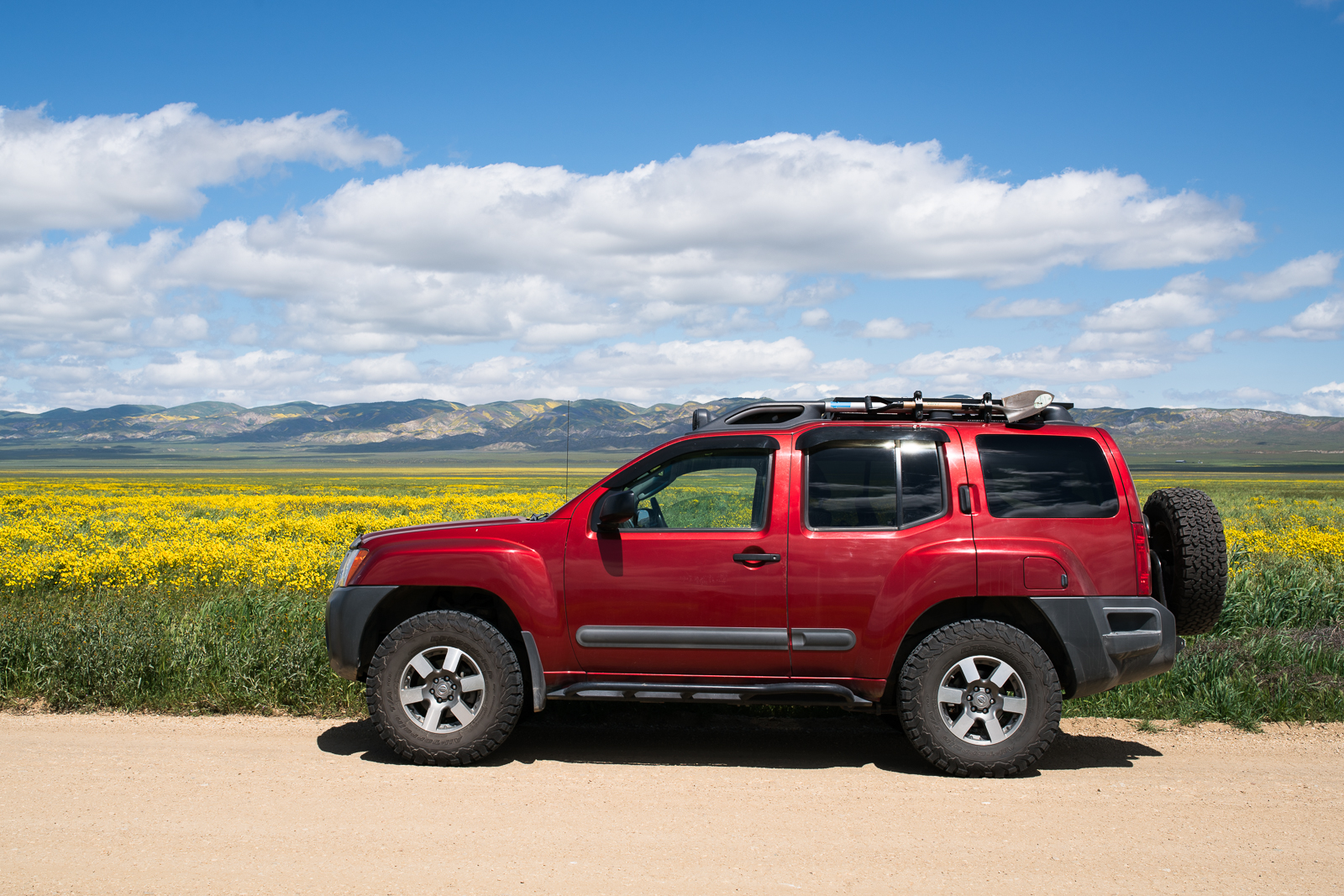
xterra in carrizo plain national monument during a super bloom
100k miles in a super bloom

On my second trip to Carrizo Plain just two weeks later, I assisted in the rescue of a woman who had ended up uninjured after her car careened down into a ravine. I took a photo with the CHP helicopter that landed to aid us.
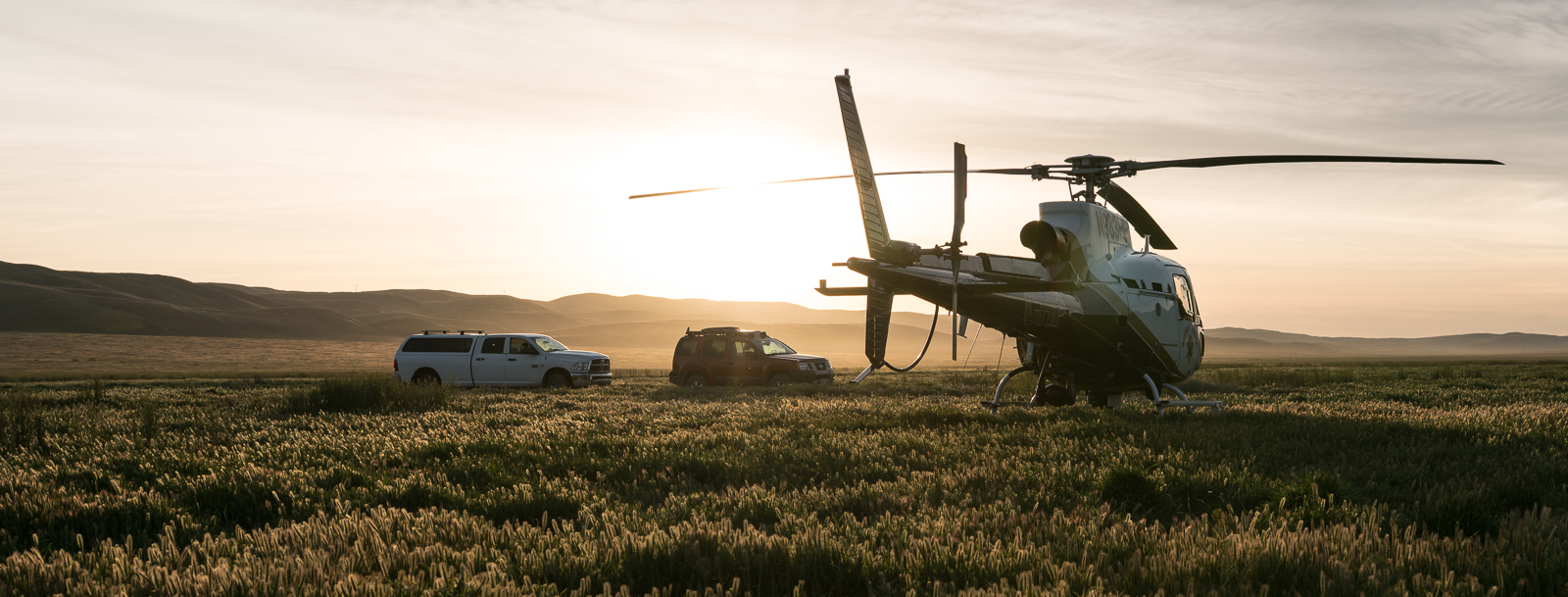
two cars and a helicopter at sunset
Rescue Squad in Carrizo Plain

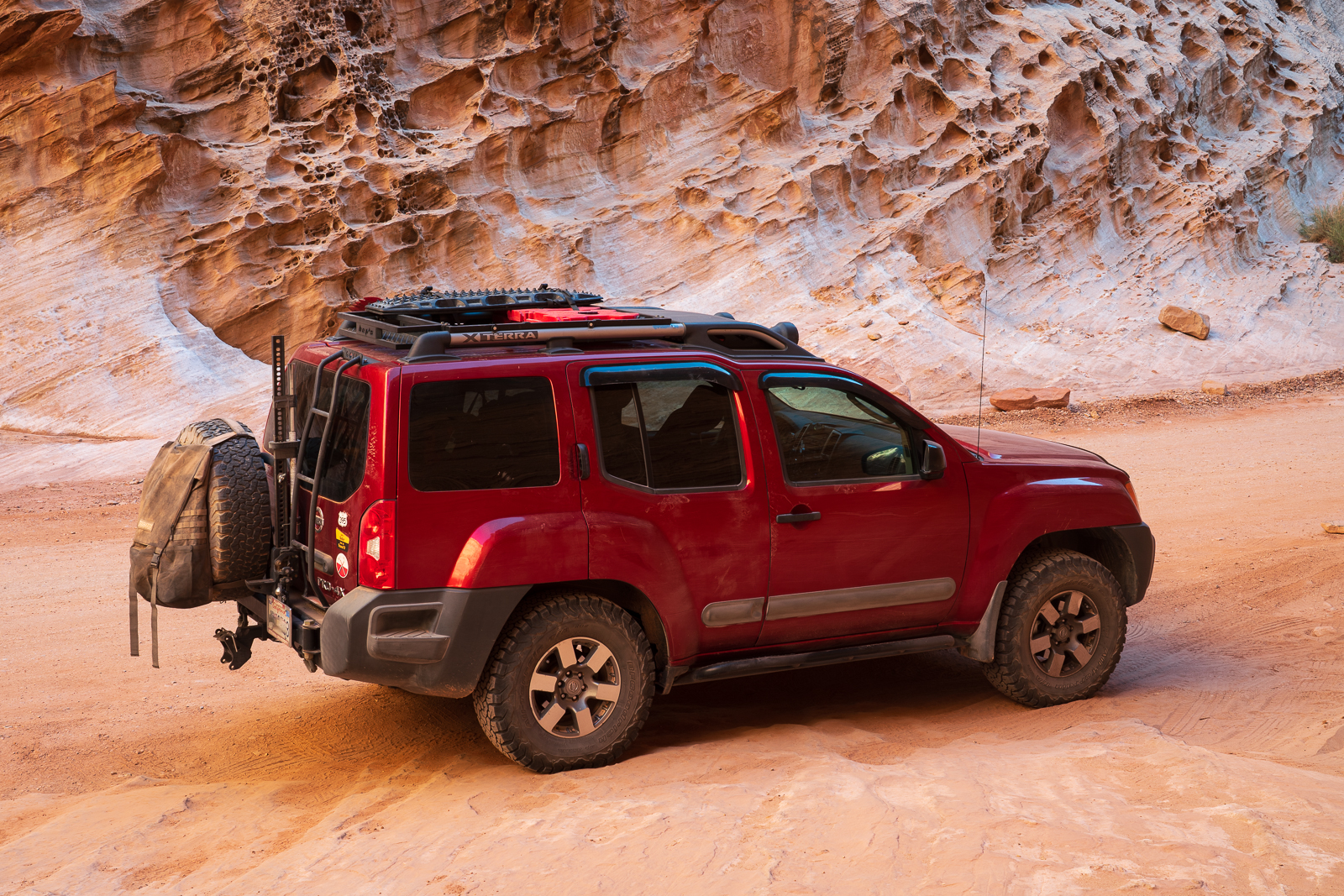
The final modifications I did on the outside were rotopax mounts in the roof basket, maxtrax traction boards that I would strap on with ratchet straps, and a heavy duty aluminum radiator skid plate. I would attach a trasharoo bag to the rear tire. I loved that the roof rack design allowed two 2 gallon rotopax that would not stick out at all on the top. I also had a bike carrier that would plug into the tow hitch. Here you can see also the hi-lift jack was moved to the rear bumper when I acquired that. The shovel in 2016 I swapped to a Crazy Beaver Tools heavy duty one, which was 100% an impulse buy based on the teeth and the color scheme (and the brand name). It proved a useful upgrade digging in hard packed desert dirt.
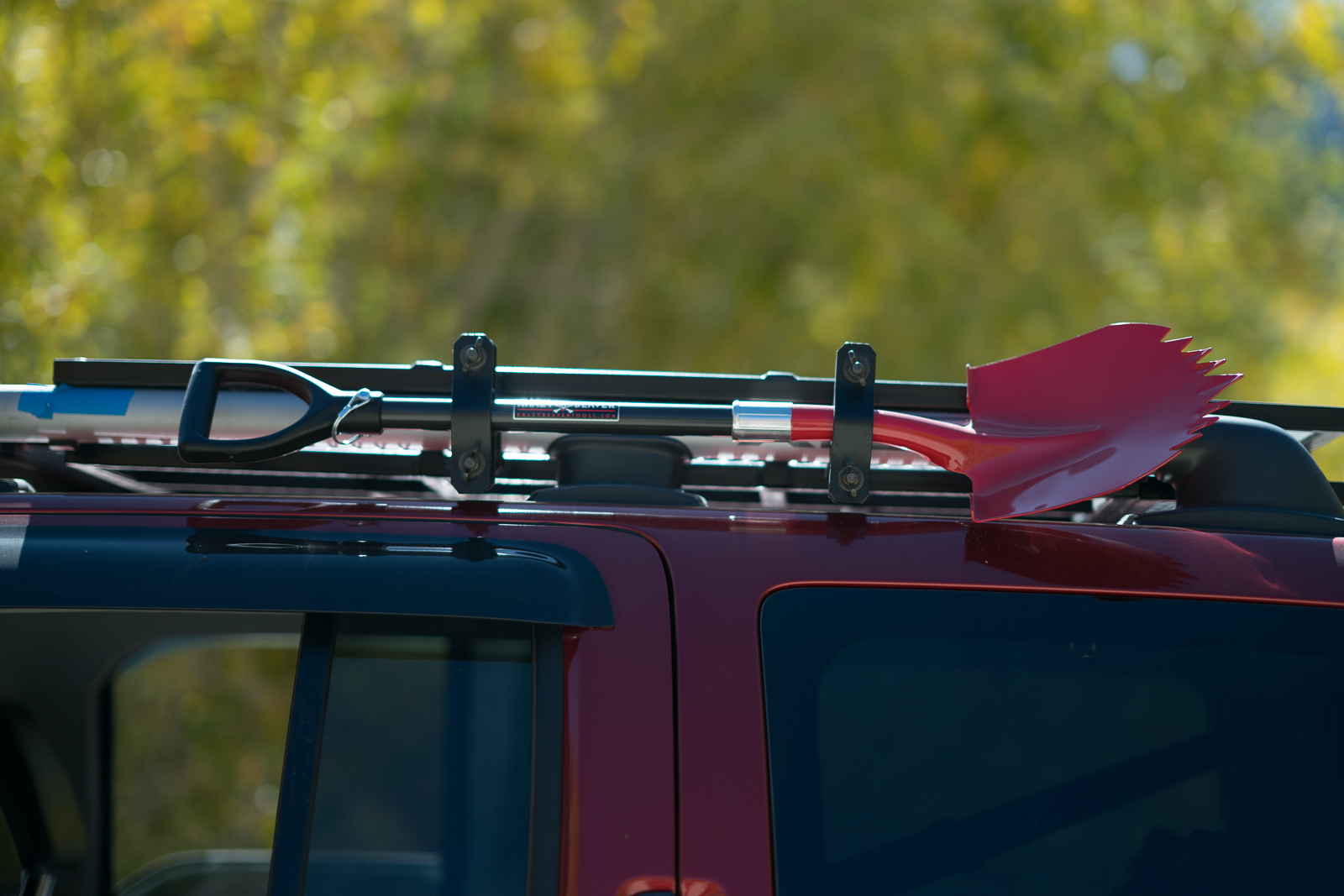
spikey pointed shovel by crazy beaver tools
Crazy Beaver Tools Shovel
xterra in capitol reef national park in a canyon
With all her jewelry

When installing the radiator skid plate, a mounting bolt inside the frame came loose. In order to make it work I had to use an aircraft drillbit (super long) to drill a 1/2″ or so hole through the frame from the top to mount a 8″ or so 1/2″ diameter bolt through.
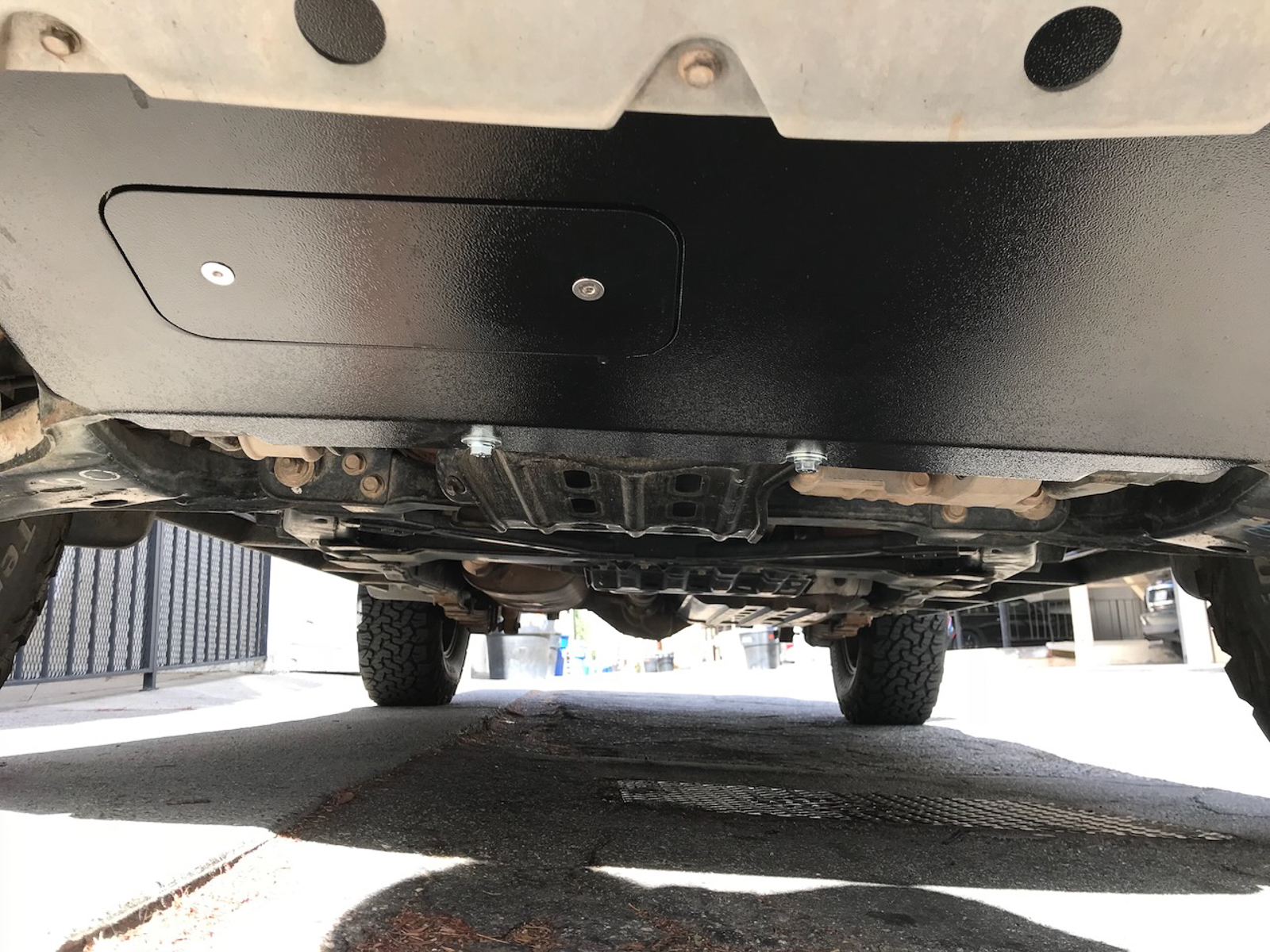
Hefty Fabworks Aluminum radiator skid
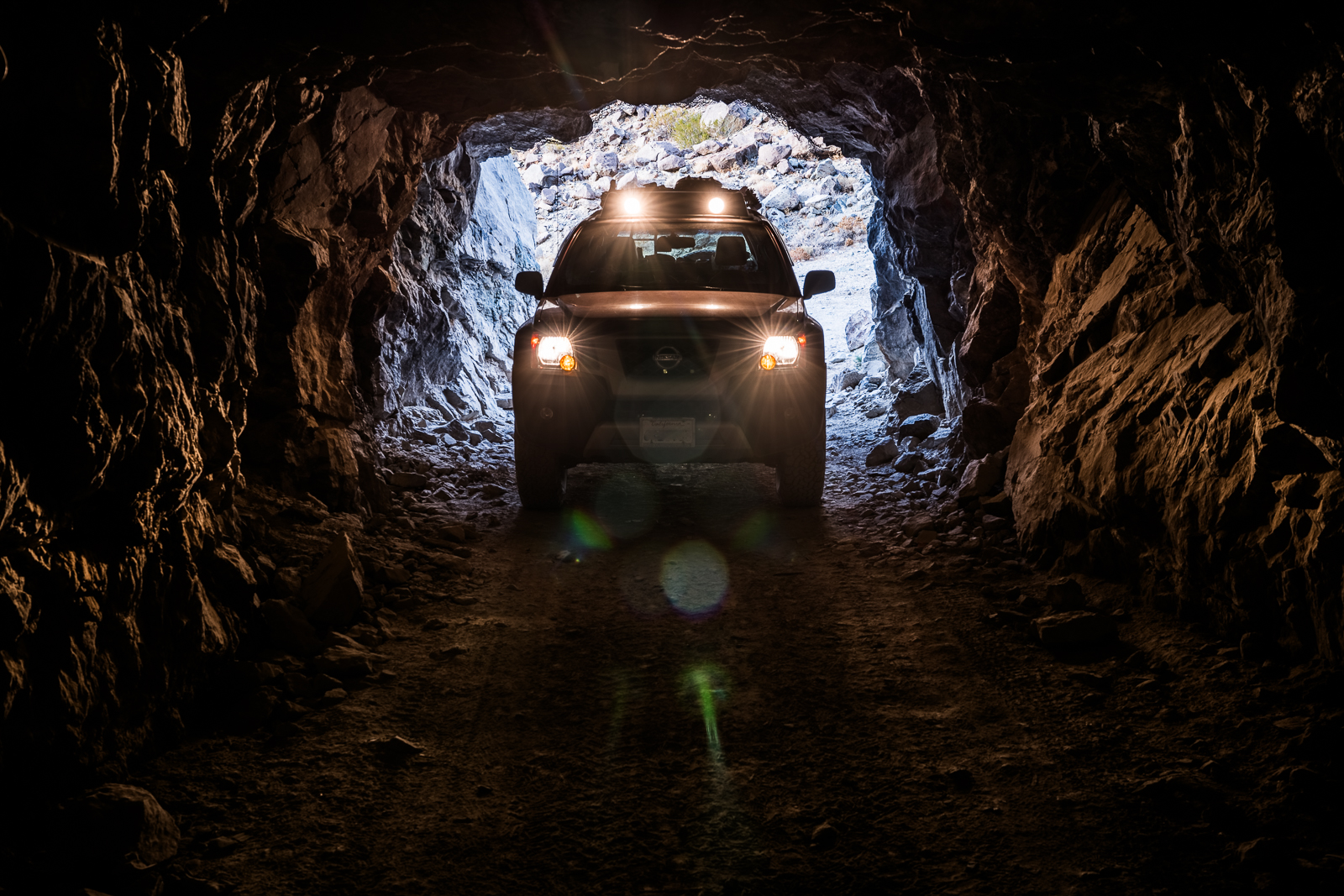
xterra inside a mine
And they call it a mine!
xterra on a shelf road at night with a super bloom of wildflowers
Superbloom Night Exploring
xterra with only 3 wheels on the ground
Hitting the 3 wheel motion

On the inside, I did some minor modifications in the cockpit area. I mounted an Ultragauge to monitor the enigne and give distance to empty when off-roading. In the center of the dash I screwed a RAM ball mount to the right of the stereo to mount my iPad. And I had adhesive mounted indoor/outdoor thermometer with the remote temperature sensor in the roof basket and rokform phone mounts and various bluetooth phone audio adapters and extra USB ports.

In the back I installed a Nisstec utiltiy rack, which really upped my game with sleeping as I could move everything on top of the shelves when i sleep as well as keep lots of things mounted in the car at all times so I could be ready to go. Above it I had a Raingler ceiling net where I kept lightweight things like my complete set of Weathertech sun shades.
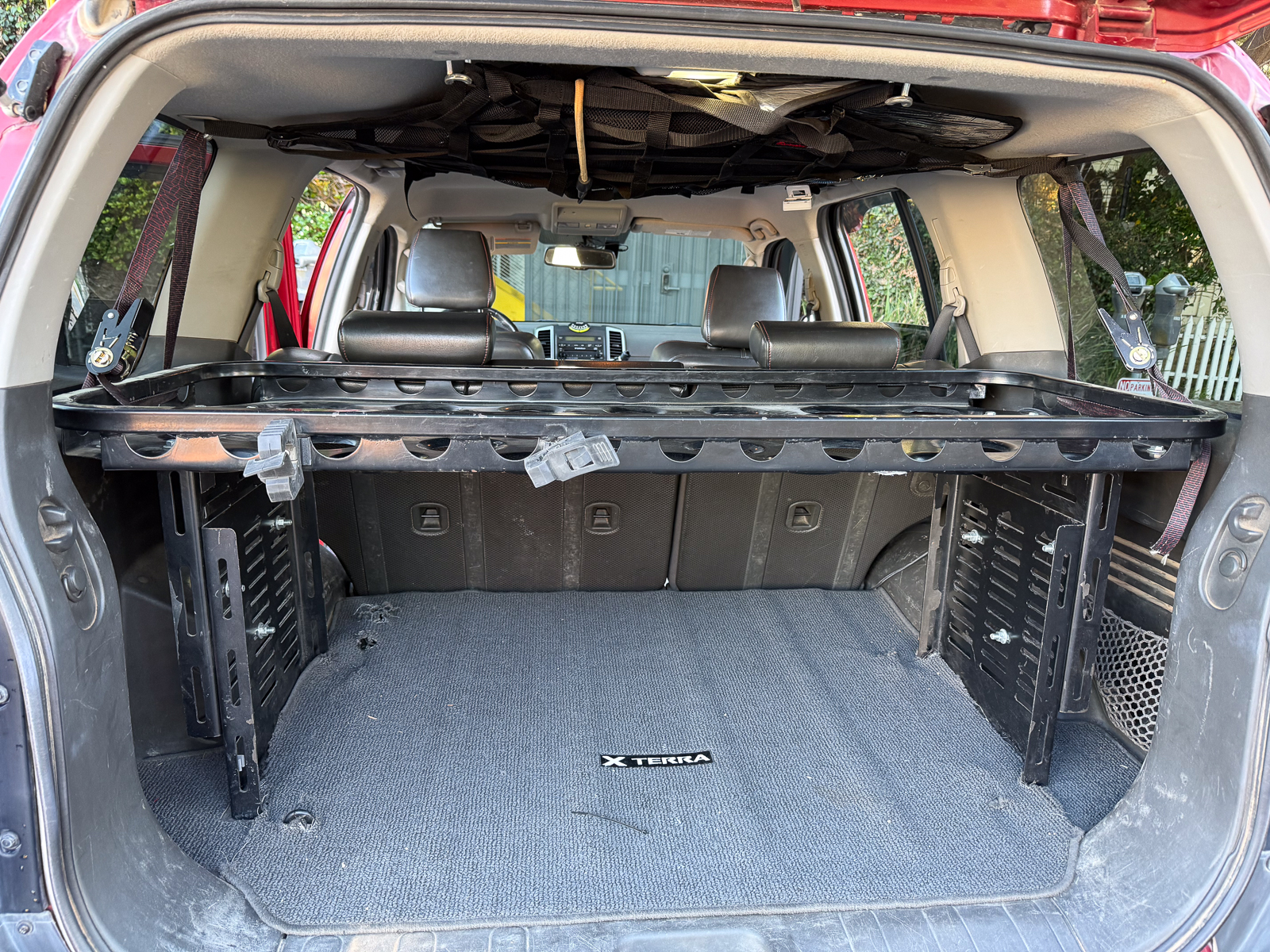
nisstec utility rack
Nisstec Utilty Rack
inside view of dash of the xterra
Mounted things on the dash of the Xterra
Me in the Xterra at night under the stars
Contemplation in the Night

For all of 10 years, the Xterra was pretty much flawless. The first sign of trouble happened in fall of 2020 when she developed an exhaust leak. We made it home but it was real sketchy and she had lost some power. It was promptly fixed. At this point she was at over 170,000 miles and some big maintenance things were approaching. At the end of 2021 I got a code for a catalytic converter. I replaced the primaries reluctantly. Then I noticed something disturbing happening. A sporatic roughness that appeared out of nowhere returning home from a trip. I started getting a code for misfires in cylinder 6. She was just about due for spark plugs so I went ahead and did that thinking it was an easy fix. The misfires came back. Then I replaced the coils. And it came back. We pulled the spark plugs and examined them, and number six was corroded. The head gasket had cracked at 186,000 miles. My father had just passed away. My Mom was visiting at the time. I said basically “just fix it” to the local shop that I had been going to and they set about a top half engine rebuild because the thought of sourcing a new engine or buying a new car was way more than I could bear at the time. Thousands of dollars and weeks later, I had her back. But she was running hot. It turned out to be the thermostat. Once that was fixed she was basically back to her old self. A few other things here and there, but adventures resumed.
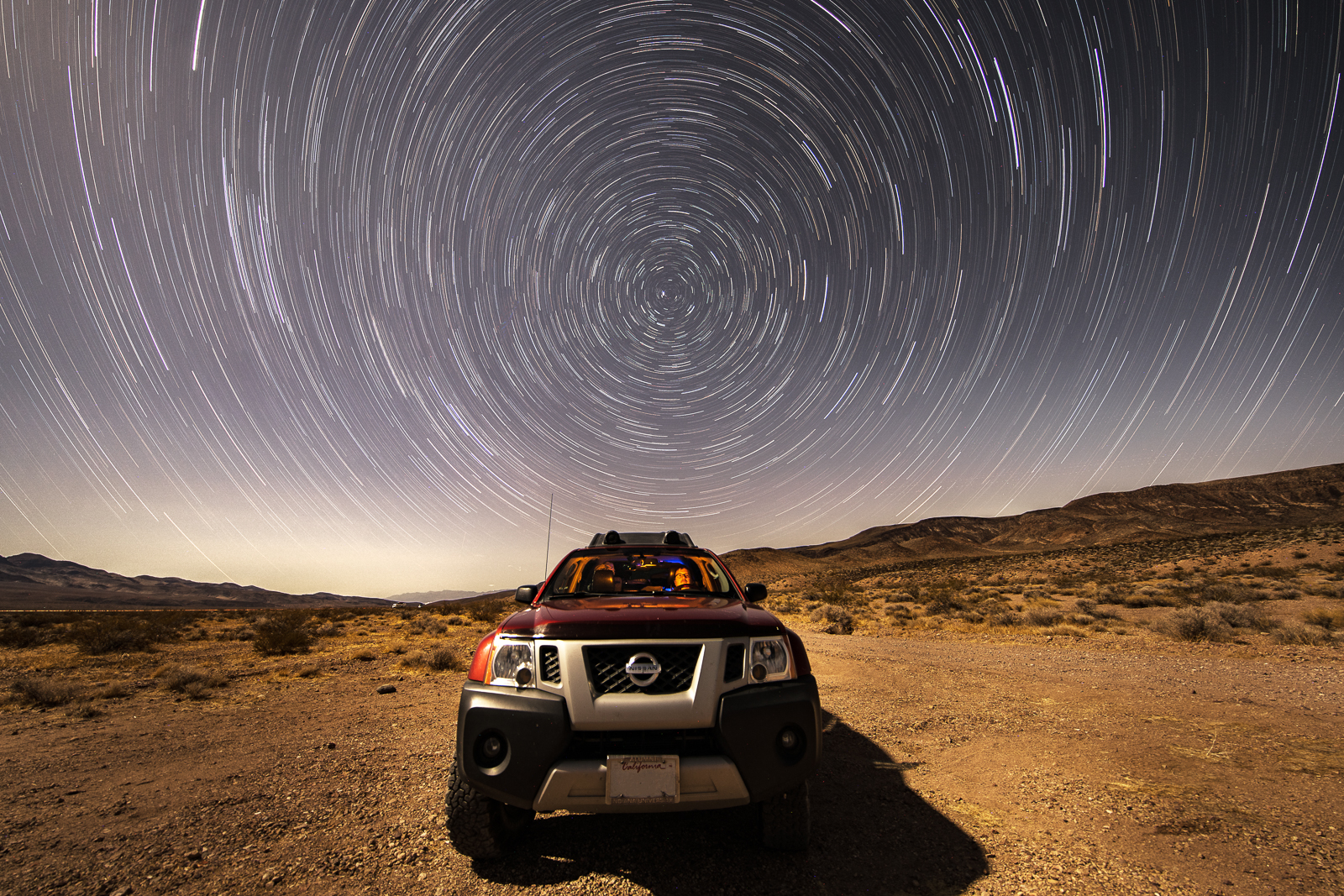
10 Years of Xterra Adventuring, 2021, Death Valley
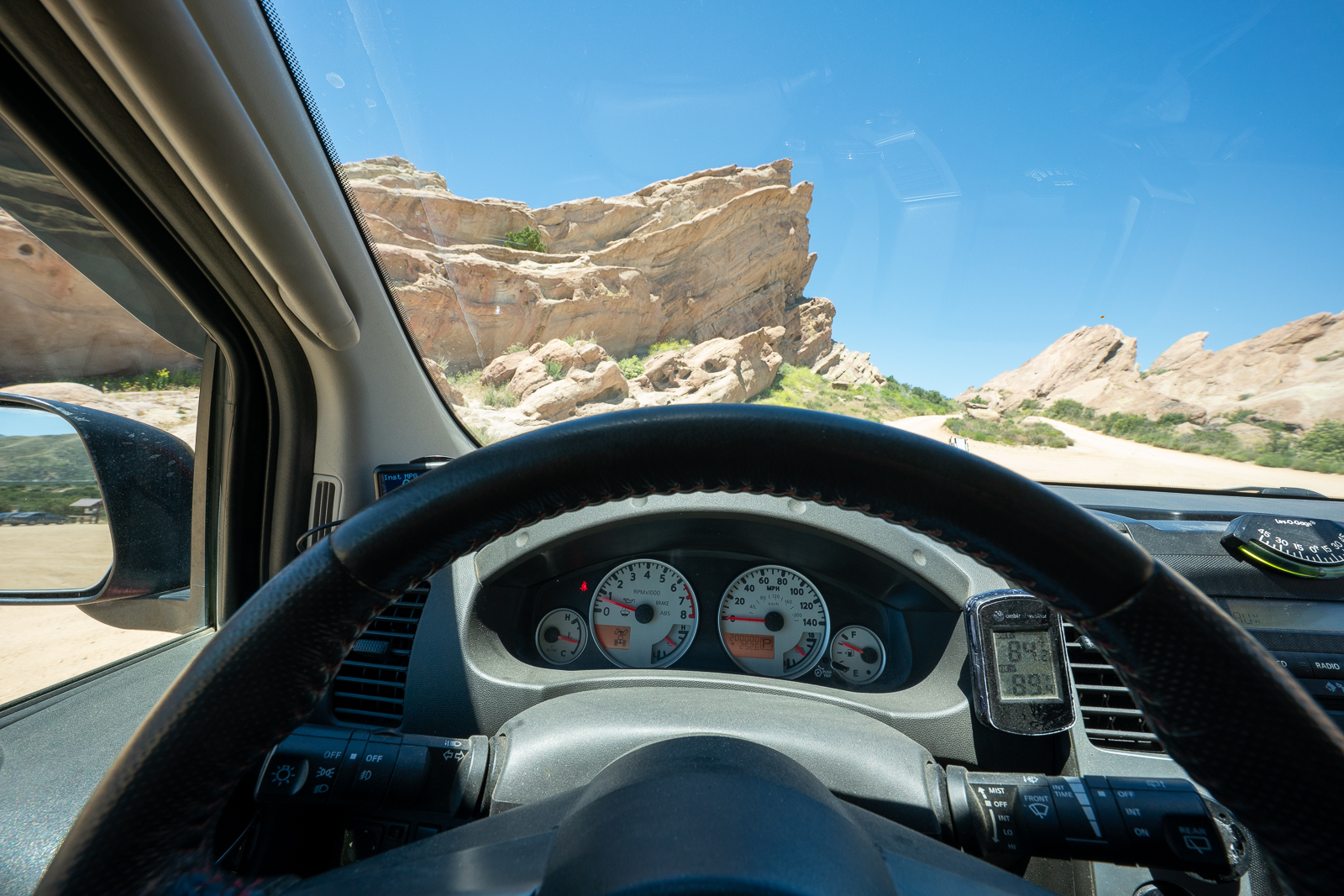
200000 miles at Vasquez Rocks
Hitting 200,000 miles at Vasquez Rocks
xterra and a wildflower bloom
Chasing Wildflowers
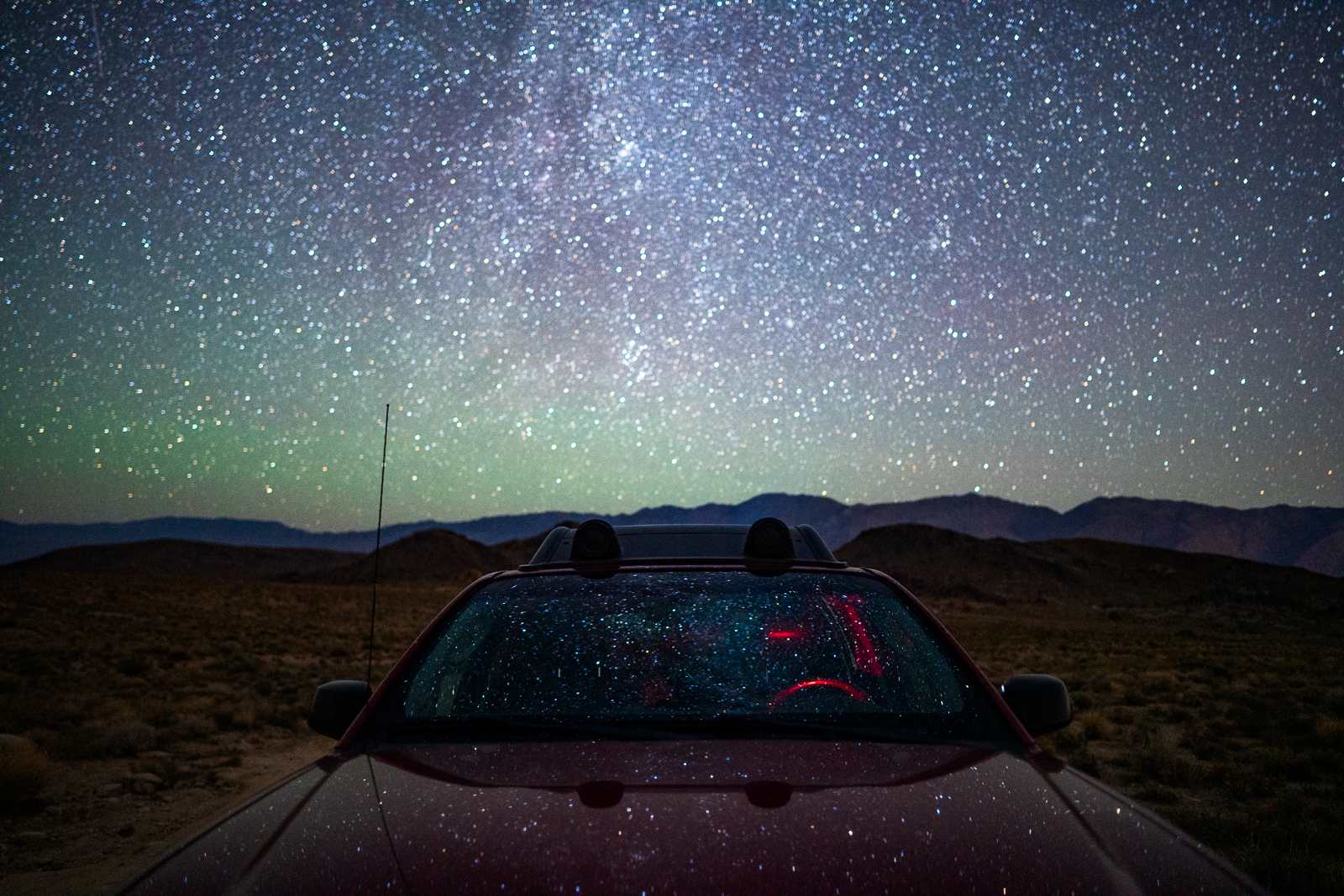
Camping with the Xterra at Night
My God, She's Full of Stars
My God, She’s Full of Stars
sunset behind the xterra
The Sun Sets on the Xterra

This year, 2025, would see her magnum opus of adventures and her demise. On the agenda was the White Rim Trail, and the Maze District in Canyonlands National Park, Utah. The White Rim Trail is an absolutely famous off-roading route. Not super difficult, but with challenging grades and over 100 miles of dirt and rock. And in the Maze District we would go to the Dollhouse, 87 miles from pavement and with an entire day’s worth of seemingly endless and challenging off-road obstacles. To start the year the starter died. So that was replaced. And before the trip I replaced the front suspension with a fresh set of Old Man Emu shocks and springs (eliminating an incredibly annoying squeak in the process), as well as a brand new set of BFGoodrich KO3 tires. I was nervous about the trip. But the Xterra did spectacularly overall, conquering all the off-road obstacles. A field repair was done to a fried electrical relay from a dedicated line to a voltage converter, all aftermarket things. She scraped the rock sliders and skids a bit but it was amazing. But just as I got home, trouble re-emerged when I got a code for P0420 catalytic converter bank 1. Sigh. Lengthy discussions with my mechanic ensued, and various things were tried in hopes that a brand new oem catalytic converter had not died after only 39,000 miles (the originals lasted 176,000). I did the math for how much maintenance was costing me at this point and it was the end. I was spending more than a new car payment would be. I just had to figure out how to sell Lava, as you cannot pass smog check in California with a bad cat, and it seems that’s what I had. Ultimately I ended up replacing the catalytic converter and selling the car to Carvana. A bit of an unceremonious end but I am grateful for all the adventuring Lava allowed me to do. She was a truly life changing vehicle. 217,300 miles well spent.

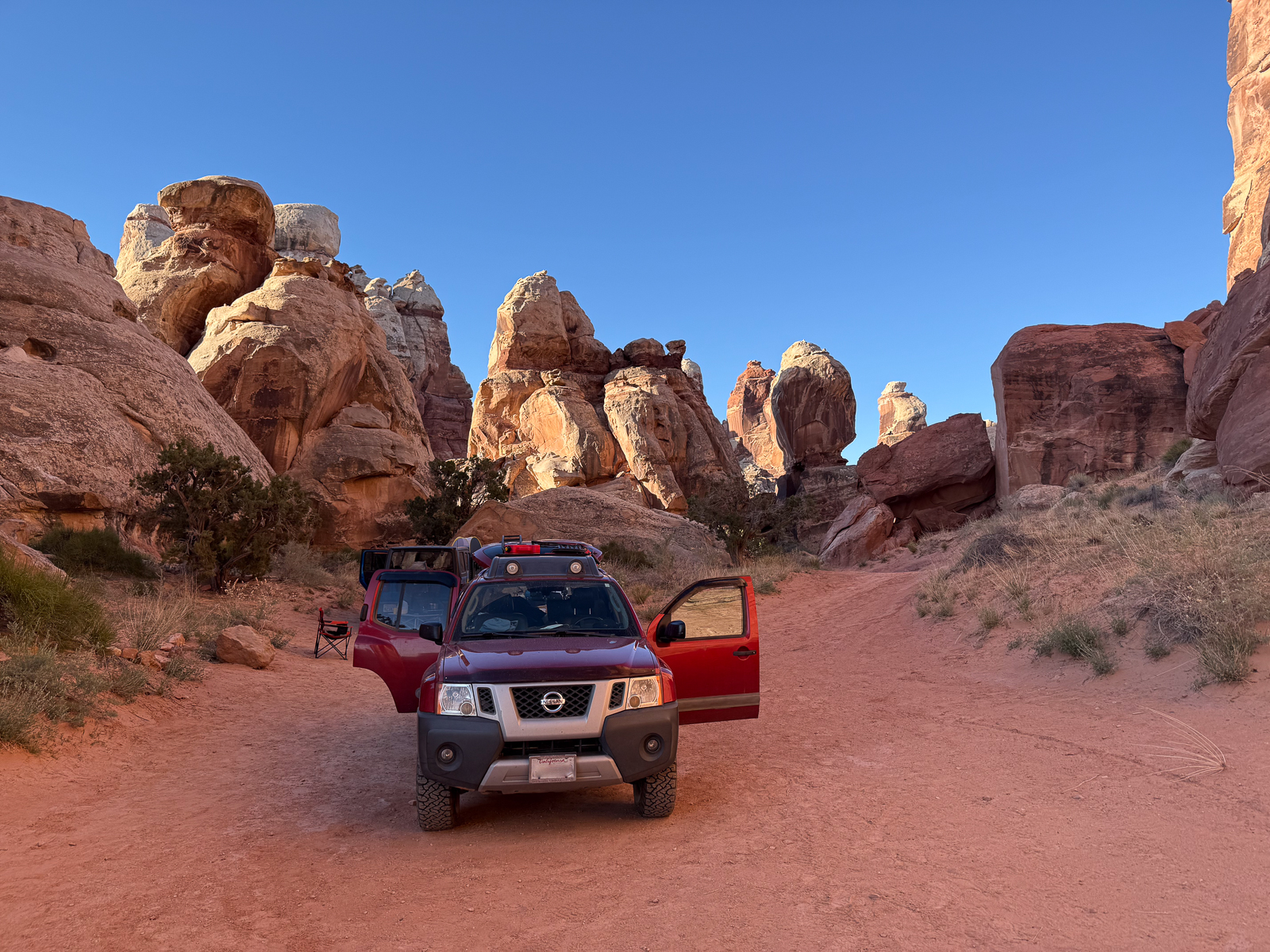
xterra along the white rim trail
Along the White Rim Trail
xterra among giant sandstone columns
In the Dollhouse

When we reached the Dollhouse, I gave Lava a hug. I was so proud of her. I met a park ranger along the way who said he had an Xterra and would not take it there, but his was all stock. Lava made it there, and all the way home. It was her last, best trip with me. She was the best. As far as vehicle goes, she will always have been my first love.
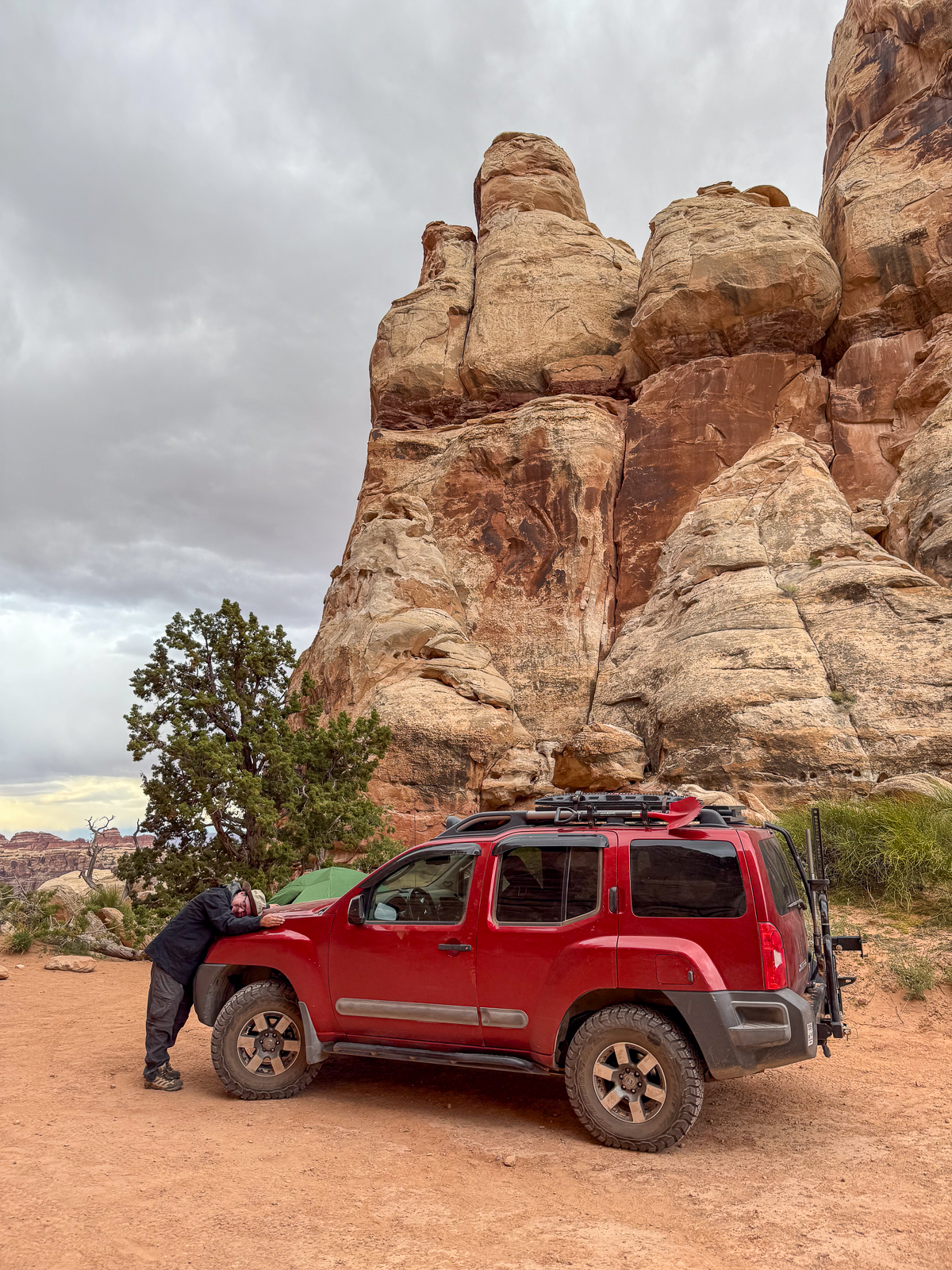
I hug the xterra
Hugging Lava after reaching the Dollhouse

P.S. – if you’re looking for a wall calendar my 2026 calendars are on sale now. They are currently being printed and will be shipped out first week or so in December.

Published in a National Geographic Book!!!

Earlier this year I received an email from National Geographic. National Geographic photographer Anand Varma had seen the photograph by Sean Goebel and me of our friend Wade Meade hiking Half Dome in Yosemite National Park at night and he wanted to include it in a book he was putting together.

Invisible Wonders by Anand Varma

The book was to be called Invisible Wonders and this is the blurb you can see over on Amazon:

In this dazzling coffee table book, acclaimed scientist-photographer Anand Varma unveils a world never before seen by human eyes, achieved through the innovative techniques of today’s finest photographers.

“If we hold our breath and gaze a bit more carefully at our world, we might just glimpse a few beautiful secrets hiding in plain sight,” writes Anand Varma

The photo is a co-creation with my friend Sean Goebel and I quickly contacted him. We jumped at the chance, naturally. Read more about the creation of The Cable Route of Half Dome at Night here.

After doing all the paperwork and sending the image, I was feeling cautiously optimistic. When it became available, I pre-ordered the book. While it certainly was implied that the image would make it into the book, I wasn’t going to say anything until I had a copy in my hand. It didn’t seem real. That day finally arrived yesterday, when a box containing this spectacular volume arrived at my door. I quickly flipped through and found our image. A full two page spread. In a National Geographic Book. Looking through the names of other photographers in this incredible volume… wow what an honor to have such company.

The Cable Route of Half Dome at Night

Thank you so much to Anand Varma and the team at National Geographic for including us in this incredible book. It feels surreal to open a book with National Geographic and that iconic logo on the cover and inside is one of my images.

The Legend of Wade Meade

Wade in his “tent.” Note the hail.

At the beginning of April, the pandemic was taking hold. Hunkering down from the world I transitioned to working from home. Mentally and emotionally I was freaked out, just waiting for someone I know to be stricken with the invisible contagion gripping the planet. And then suddenly all together different terrible news arrived, and my emotional dam burst. Wade Meade, the legend, had passed away in a freak rock climbing accident.

What follows is how I knew Wade, and why he was and always will be a legend.

In 2011 I had completed my photo of the 97 Switchbacks at Night of the Mount Whitney Trail. I was super pleased with the result, though maybe a little less so from its failure to go viral, but I did sell a handful of posters and even a couple prints of it over the years. One of those posters went to a customer in Hawaii, Sean Goebel, who was also a landscape and nightscape photographer. Sean and his fellow photographer friend Matthew Saville contacted me in 2014 to ask about doing the 97 Switchbacks again but this time shooting time lapse from multiple angles. I agreed and a small crew came together. Matt and I would hike up the main Mount Whitney Trail and Sean and their other friend Cory Kobel would hike up the Meysan Lake Trail to then climb to the top of Mount Irvine for a truly epic view of the Mount Whitney area. Of course, the key piece of the puzzle to recreate the light trail was someone to carry the light. When I inquired as to who was going to do this part of the trip, the answer was Wade Meade. I was told he would have no problem hiking up the switchbacks at night and in fact he would probably go to the summit even.

When we assembled at Whitney Portal it quickly was evident that we were all going to get along and that Wade was more than up to the challenge of lighting up the switchbacks. Before departure we had giant pancakes at the Whitney Portal Store and the idea was floated as a joke about Wade going up the switchbacks naked. We had some laughs and after that last minute morning fuel we departed up our two trails. Sean and Cory headed up the Maysan Lake Trail and Wade, Matt, and I headed up the Mount Whitney Trail with our huge packs of camera and camping gear. Fortunately for me, the goal was just to get to camp at Consultation Lake (12,000 feet). Matt and Wade were relatively unfazed by the hike up. We set up camp for the night to prepare for the big next day.

Day two began with a thunderstorm. At that altitude, it’s pretty unsettling to have lightning inbound closer and closer until there’s no gap between flash and thunder. Hail rained down on our tent and then the storm broke right as the fresh morning sun shone upon the Sierra Crest at Mount Muir. The spectacular sunrise heralded the arrival of a wonderful day. While Matt and I scrambled around taking photos Wade stayed in his “tent” if you could call it that. It was just a tarp! A tarp supported by guylines and his trecking poles. It totally worked for Wade while I found it to be a puzzling choice of accommodation. In the morning Wade perched on a rock on the shore of the lake near its outlook and fished for trout with his bare hands. I joked that he looked like Gollum from the Hobbit.

Exploration filled the middle of the day with all three of us summiting Wotan’s Throne before preparing for the night’s photo shoot. High on the ridge line, Sean and Cory made their way to Mount Irvine’s 13,786 foot summit. By the time night fell we all made our way to positions. 8 cameras started clicking away as the granite wonderland descended into starlight. Wade made his way down to Trail Camp. And, before were were fully ready to go, we heard over the walkie talkie from Wade that he was ready to start, that he was naked, and it was time to go. I couldn’t believe it. We were hundreds of feet away from him but I had thought from my 48 hours knowing him that he was probably really going for it. “He really is crazy,” I thought. And off he went.

97 Switchbacks At Night, Digital Edition (v2)
97 Switchbacks At Night 2014, illuminated by Wade

Imagine you have climbed to the top of Mount Whitney. It’s a tremendous achievement. It took you all day, but you did it. And now you’re making your way down from the summit exhausted. You are almost to Trail Camp with just the final two miles and change down the infamous 97 switchbacks, and here comes this energetic 6 foot something red haired naked guy with 7 bright headlamps lighting up 360 degrees around him as he effortlessly climbs up the trail in the dark. I can only imagine the shock and utter confusion of the people he passed on the way up, and the thought makes me laugh still to this day. When he reached Trail Crest at 13,600 feet he met the Wind, and put on clothes for the rest of the trip in the dark all the way to the summit and back.

We nailed the shot and the time lapses. There’s no mistaking Wade when he hits the trail. He’s the bright fast moving one.

The Mt. Whitney Night Photography Extravaganza from Sean Goebel on Vimeo.

Laughter ensued after it was done, and we hiked down with a mission accomplished. This Wade guy was cemented in my mind as the crazy red-haired mountain man who was up for such adventures. And we would call upon him again just two years later. This time it was for Half Dome.

The Cable Route of Half Dome at Night, illuminated by Wade

For the Half Dome Trip, Sean and I backpacked to Mount Watkins on across the valley northeast of Half Dome. Wade, hiking solo, ascended from the Yosemite Valley Floor on up to Half Dome and waited for our signal over the walkie talkies as to when to ascend to the summit and back down via the Cable Route. From across the valley I recall jokes and stories over the walkie talkies to keep us entertained. Wade thought he saw some eyes on the way up of a mountain lion which gave him a good scare alone on the trail. Just as he had done with Mount Whitney, it seemed effortless as he scaled Half Dome in the dark and back down, tracing a light path across the famous polished granite. Wade had arranged for our sleeping accommodations in the valley the night before, and we met up with him along Tioga Pass after, with another notch in the belt of Wade-illuminated luminous light trails captured on camera. He had thought about doing Half Dome again, via the Snake Dike route, alone in the dark the next night after the Cable Route if he was up for it. That would have involved free soloing the route and us capturing from Glacier Point. I was relieved that he was not feeling up for it as that thought had me extremely nervous. Though if he wanted to do it I had no doubt he could. Once again there is no mistaking his bright light.

Half Dome Night Timelapse from Sean Goebel on Vimeo.

We didn’t have a new photo of Wade from this trip, so I always laugh at the “file photo” of Wade with all the headlamps from the Mount Whitney trip that we used in this time lapse.

This spring we were hoping to enlist his help again in Yosemite for the Yosemite Falls trail with moonbows, but first the pandemic and then tragedy intervened. I didn’t know Wade very well. I really only knew him from these two trips and some scattered interactions online, but the impression he left behind was vivid. He seemed a boundless soul of unlimited energy. His enthusiasm for participating in our night photography shenanigans was that of pure adventure. I saw his ongoing adventures from time to time through the modern social media windows. When he climbed El Capitan I thought “Epic! Of course he did!” It seemed there wasn’t much he couldn’t or wouldn’t do. Just imagine the confusion and shock of the people descending the swtichbacks in the dark and encountering him again. Ah it makes me laugh. He was in my mind and always will be a legend for that and for his generous and adventurous soul.

I am very sorry that I won’t get to adventure again with this amazing human. I’m thankful to have gone on two adventures. I wish there had been many more. My heart goes out to his family and friends. Rest in peace, Wade.

10 Favorites of 2019

The year comes to a close with a truly spectacular year for me, photographically. I haven’t described all my various trips, triumphs, and tribulations here on this blog because as always it is a fairly neglected outlet for me. But, with 10 images I can touch on some of the best moments and the first three images actually come from a span of about 24 hours.

Moon in the Eye
Moon in the Eye

Jumping right in we start with the total lunar eclipse of January 2019. I was pondering just what to do with this event, which would be fully visible here in California. In the previous blog post you can read all about the process but suffice to say I was determined to frame it with an interesting foreground, and that was the Eye of Alabama arch in the Alabama Hills, California. The night before the eclipse I had a dry run with the full moon to figure out positions. Thin clouds overhead created a dreamy scene, producing a 22 degree halo refracting through the tiny ice crystals in the cloud. The bright moon produced the lunar equivalent of a sunstar through the camera, and on the right side of the frame the constellation of Orion is clearly visible long before Betelgeuse’s sudden dimming. This is my favorite image of the entire year.

Fire and Ice

Sunset on the next evening, the night of the eclipse, produced this incredible sunset over Mount Whitney just to the west. Clouds were dancing along the crest of the Sierra Nevada, and when the sun got low enough the light turned warm and crepuscular rays beamed from the jagged silhouette of the faces of the summits. Whitney itself was partially cloaked in precipitous clouds, slightly masking the summit with freezing cold diffusion. The setting Sun’s light bounced around the clouds and embraced the cliff faces with warm glowing ambience completely real. (Fake landscape glows are something I really really do not like and I see them so often.) The color contrast between the orange light of sunset and the ice cold blue of the snowy grey granite in the foreground which was illuminated only by the blue sky above and to the east was just superb. This is my favorite image of Mount Whitney summit I have ever taken, and I have taken a great many over the last decade.

Eye of the Lunar Eclipse

The fiery sunset was just a prelude to the main event of the evening which was the lunar eclipse. Here it is, with the red moon framed in the Eye of Alabama arch, wrapped in a halo by the thin clouds it was intermittently hiding behind. Read more about it in the previous blog post.

Superlative Bloom
Superlative Bloom

Moving on from the icy cold winter and celestial events, we arrive in springtime where in 2019 Southern California really exploded in spectacular wildflowers. I paid two visits to viral sensation Walker Canyon, which had just the most incredible blooming of poppies in the Temescal Mountains. The fluorescent orange poppies took over whole mountainsides and sometimes intermixed with purple flower like you can see here. The crowd was huge though only 10-20% of what would arrive the following weekend which I thankfully did not come back to. Six miles of wandering through billions of flowers on dirt trails and fire roads and it was easy to imagine I was on some alien planet where the land was orange instead of green. This image is my favorite of the ones I took that day.

The Best Way to View the Superbloom

I did return but not until two weeks later. And when I did, along with my friend Matthew Saville, we shot photos from miles away across the valley, away from the crowds. The air was hazy, but the bizarre sight of the multicolored kaleidoscope mountains was really something to behold. Fortune smiled upon us and para-gliders were taking off from the same ridge line as we were standing upon. We had moved to a spot where Mount Baldy emerged from the thick air below, towering above the relatively small Temescal Mountains in the foreground which were host to the superbloom. The town of Lake Elsinore stretched across the valley below, and a para-glider just happened to wander towards the shot I was composing. At the right moment I triggered the shutter to capture the para-glider, the town, the superbloom, and Mount Baldy all in one shot. The San Francisco Gate subsequently picked up the photo and published it.

Watched Sunrise
Watched Sunrise

Have you ever felt like you were being watched? That’s certainly the feeling I had when I spent the night here along the crest of the Temblor Range of mountains adjacent to Carrizo Plain National Monument. California’s super bloom continued here in 2019. Although not quite to the levels of 2017 when I first came here, the mountains were absolutely spectacular and this otherworldly scene was a true delight to discover. Purple bush lupines danced in the breezy air while a huge stone face looked back at me as I looked upon the colorful landscape. The morning was blessed with some thin high clouds to splash even more color into the sky above. This scene is one of my all time favorites to have discovered and captured.

Racetrack Sky On Fire

The Racetrack. One of the most unique places on Earth, I love this place. This year I had the special opportunity to take my Dad there to see it. We had an exhausting schedule, but managed to get to the Racetrack before sunset. And when we got there, we were treated to the best sunset I have yet witnessed out there. Low puffy clouds
lit up across their bottom edges as if on fire as the red-orange glow of the Sun skimmed across their fluffy shapes. Though even without the significance of my company I would include this image on this list from 2019, it has truly special significance from my shared experience with Dad.

Star Trails Over Yosemite Falls

Finishing off spring, here is an image from beautiful Yosemite Valley in the moonlight. My first visit here in the springtime blew my mind. Waterfalls were everywhere, including many I didn’t know existed. Waterfall flows were near their peak, and Yosemite Falls was no exception. The roar from its thundering waters could be heard for miles. This night on May 11th was still and beautiful. I decided to shoot some star trails looking towards the falls. I sat on a wooden boardwalk that traverses an area that is a seasonal spring pond in Cook’s Meadow and for almost two hours sat there watching the moonlit landscape and listening to the waterfall roar and croaking frogs. The frogs, by the way, probably get credit for the complete surprise to me of a mosquito-free evening. This image was fourteen five minute exposures added together with airplane trails removed.

4014 Crosses the Mojave

2019 saw the completion of a five year effort by the Union Pacific Steam Program to restore one of the largest steam locomotives ever built, the Union Pacific “Big Boy” number 4014, to operation. Back in 2011 I photographed their main locomotive #844 crossing over the Mojave River in Afton Canyon out in the Mojave desert. Knowing that 4014 was going to visit southern California in October visiting the same bridge, I decided to head out there and capture it. It was traveling the opposite direction, so I knew it would be a very different shot. I also knew that although I was on the shadow side of the locomotive, there would be enough bounce light from the cut reflecting off the shiny metal to make the shot worthwhile. After hours of waiting, 4014 chugged uphill slowly through the canyon and it was an incredible sight. Check out my video of this scene and many others as I chased it around southern California with my Dad and brother.

Into the Unknown
Into the Unknown

Finally, Thanksgiving weekend last year provided a truly rare opportunity to experience the Alabama Hills covered in snow. This area, one of my favorite places in all of California, only rarely gets significant snowfall. Rarer still are the times that snowfall lands on dates that I can actually be there away from my day job experiencing it. That was the case for 4 straight days of winter bliss. The snow also brought beautiful roiling clouds and layers of fog that hugged the ground and later ascended into overhead clouds. One vantage point, which is extremely popular on Instagram (and for good reason because it is gorgeous), produced this scene. Fog had rolled in to a patch that perfectly obscured the ground at the base of the hill. The road goes straight into the fog and you cannot see where it goes from there. Above the Sierra Nevada bask in sunlight as does the foreground, with the photogenic pyramid of Lone Pine Peak dominating the skyline. The desert ground is completely frosted over with the fresh snow. I truly love the way weather can transform landscapes like this, and while it was a tough choice to narrow down just one favorite of the whole wintry weekend, this one does fit the bill.

So there you have it. Ten favorites from a truly great year for my photography. I can’t wait to see what 2020 brings. Stay tuned.

Total Lunar Eclipse, January 20th, 2019

Eye of the Lunar Eclipse

All the way back in 2007, soon after I acquired my very first DSLR digital camera, I shot photos of my first lunar eclipse. I don’t remember if I had seen one prior to that, but on August 28th 2007 I took my best shot with my trusty Canon 20d and a 70-200mm F4 lens I borrowed from a friend. It occurred at 3am, and from the rooftop of my work I captured the zoomed in view as much as I could manage. Check out the photo at the bottom of this post. Lunar eclipses are cool, but it was the beginning of the realization that to really take a more interesting eclipse photo, you need a foreground. This is problematic if the eclipse happens high in the sky. Scroll down for a moment and check out the wide view of the same eclipse. A uninteresting photo of nighttime Santa Monica and a teeny tiny little red eclipsed moon above. This is precisely the kind of photo that many people take the 200mm moon and slap it into this scene and try to say that’s what it looked like. Which, aside from being dishonest, looks awful. It’s much more fun and challenging to do things in-camera. Optically. Realistically. Fake is utterly boring, and I say this as someone who is literally a professional compositor. Please don’t ever enlarge the moon. So anyway, after looking at the wide view the quest began for any future eclipse to attempt to find some kind of foreground to go with it. Fast forward all the way to 2019, and I was brainstorming on what I could try to align with the 2019 eclipse. Like that eclipse 12 years ago, this eclipse was going to happen high in the sky. My mind wandered as I scoured Google Earth, racking my brain for any kind of idea of something interesting. The most recent lunar eclipse happened on January 31st, 2018. For that eclipse the best I could come up with was to try to capture an airplane on approach to LAX in front of it, but alas that was unsuccessful. I didn’t want to repeat what happened in 2018. And then an old photo popped into my head. It was from the same day in 2012 that I had dropped off the 97 Switchbacks at Night to be be on display behind the permit counter at the Eastern Sierra Interagency Visitor Center. My best friend and I wandered over to the Alabama Hills and hiked around finding arches. We found the Eye of Alabama arch and hiked up to take a look. It was in the middle of the afternoon and the moon was high in the eastern sky. While we were there at the arch, I realized I could frame the moon with it.

The Eye of Alabama
The Eye of Alabama

I wondered if the eclipse would align like that? What would that look like? I browsed back to see what time of day precisely that I took that photo. Then I looked up how high precisely the moon was then in the sky. Knowing that was an alignment that worked, I then looked up the same data for the January 20th 2019 lunar eclipse. To my delight, it suggested that indeed the eclipse would be visible at roughly the same height! Barring some other better idea or weather failure, I resolved to do try this and see what happens. As much planning as I could do using the amazing tools like Google Earth, there’s no substitute for being there. Fortunately, the eclipse was on a Sunday night, so I arrived a day early to scout out what I was going to do. I did this even though the weather forecast had turned rather grim. The forecast for Saturday night was mostly cloudy, and the forecast for Sunday night was 40% chance of rain with 20+ mph sustained winds and 40mph gusts. That’s a pretty awful forecast for a lunar eclipse requiring long exposures. Tripods are great but they are no real defense against that kind of wind onslaught.

During the afternoon I went up and visited the arch that I had not visited since that visit 7 years prior. I pulled out my phone and fired up the app Moon Seeker, which uses AR (augmented reality) to overlay the moon position onto the phone’s camera view in real time. You can dial in a time of day and see where the moon will be at that time at your geographical location. Standing below the arch, I dialed in maximum eclipse.

Approximately maximum eclipse (left) with start of total eclipse (right)

Looking good! As a sort of rehearsal, I endeavored to return at night to practice shooting the moon through the arch. This would truly answer the question as to whether all of the planning would work out. The moon the night before moves in a nearly identical path but about one hour earlier. So with the peak of the eclipse happening at 9:16 the moon would be in roughly the same position the night before at 8:16. The sky remained cloudy all day but with just thin clouds. These clouds proved to be no match for the illuminating power of the full moon which easily cut through with the added benefit of producing a moon halo as the light from the moon refracts to form a huge bright circle in the sky where the ice crystals are present. While experimenting with various exposures, I produced this wide shot. I stopped the lens way down to maximize the star pattern of the flare.

Moon in the Eye
Moon in the Eye

Looking at this result, I was elated. Even if the lunar eclipse shot fails, at least I have this image, and it is a keeper. I went to bed knowing a long day was ahead. After numerous wanderings around the Fossil Falls area, the Alabama Hills, and a stop at Copper Top BBQ in Big Pine for lunch, I returned to a cloudy Alabama Hills for the main event. I parked just off the road and shot photos of the sunset behind Mount Whitney and then waited. The Alabama Hills are a popular place, and there were numerous other photographers around. Several of them were quite close. I set up a wide view time lapse camera nearby and kept waiting for the cover of night. I really was weary that someone might try to copy me if they saw what I was up to. Despite the abysmal forecast, the conditions at this time were perfect. There was no wind, and there were very few clouds. In the dark using only the moonlight I hiked my cameras up to the arch to try to set up as much as I could ahead of time. I then wandered back to my car and listened to some music and podcasts to help pass the time. At 7pm, the wind turned on as if someone flicked a switch. It went from totally calm to gusty, and I started to realize the forecast wasn’t quite as wrong as I hoped. To the north I could see that the sort of invisible force filed that was containing the precipitation to the ridge line was breaking down and rain (and wind) were spreading into the valley a bit. I hoped it would hold off. Looking above a small thin cloud had grown into a large flat dense one obscuring the moon. Effectively the cloud was blocking a view for the eclipse for all of Lone Pine and the Alabama Hills. Here is the view from the arch looking west. You can see the bright moonlight on all of the Sierras and a deep black shadow on all the Alabama Hills.

The Cloud Shadow
The Cloud Shadow

Here is a little time lapse showing the cloud:

Short time lapse showing the eclipse blocking cloud from Kurt Lawson on Vimeo.

In the end, the cloud relented *just* in time. The narrow window of time for the eclipse to be visible inside the arch was about 10 minutes. And so during those 10 minutes I frantically took as many shots as I could. The wind was very gusty, and despite my large heavy tripod, getting a totally stable shot was difficult. A distant car provided some unexpected light painting during some of the shots. And the cloud hiding and revealing the moon caused some shots to have a sort of double exposure effect where the moon had moved a bit while it was obscured.

First emergence in the Eye
Eye of the Lunar Eclipse - Wide
Eye of the Lunar Eclipse – Wide
Red Eye Eclipse
Red Eye Eclipse

All of these are single exposures with no blending between frames. Certain impracticalities like bumping the tripod and the laws of physics made an in-focus arch impossible to go along with the in focus moon. I decided to focus on the moon and stars anyway since I originally expected the arch to silhouette entirely. In the daytime image from 2012 of the arch with the moon behind, I had my lens stopped down to f/32 to achieve a somewhat in focus moon with the in focus arch. F/32 would never work for a night image. Finally, the main image, which I actually drove into Lone Pine and sat on my laptop processing and then posting (before the eclipse was fully over).

Eye of the Lunar Eclipse

Here’s the same image completely unprocessed:

Eye of the Lunar Eclipse - Unprocessed
Eye of the Lunar Eclipse – Unprocessed

My processing in Lightroom was simple. It’s just Exposure +1.35, Highlights -56, Shadows +60, Blacks +100, and a tonal curve to control the way the shadows roll down and a white balance adjustment. That’s it!

So there you have it. It actually worked out. After I moved my main cameras back to my car and shot a couple of telephoto shots of the eclipsed moon for good measure, I felt a rain drop. And then another. I quickly gathered all my gear up and called it a night as far as shooting goes. I was exhausted.

Check out some of my photos from past Lunar Eclipse shoots, starting with the two boring shots of the 2007 eclipse over Santa Monica.

8/28/07 Lunar Eclipse
8/28/07 Lunar Eclipse at 200mm on Canon 20d

The red moon is neat, but what about all that black space. Wouldn’t it be great to do something with that?

8/28/07 Lunar Eclipse, wide view

Tiny little red moon over city. How long would it take for people to really realize this photo includes an eclipsed moon?

2/20/08 Eclipse, 300mm

In 2008 I reached 300mm and caught a plane near the eclipsed moon, which streaked in the 1/2 second exposure. It wasn’t until 2011 that I found a good subject:

Eye in the Sky
Eye in the Sky

A holiday decorated Manhattan Beach Pier featured the totally eclipsed moon directly above just before sunrise. A plane streaked just above it for one of the exposures and I thought it reminded me of the Egyptian symbol for Ra. Speaking of Egyptian:

Super Blood Moon Eclipse Over Egyptian Obelisk

In 2015 I found myself wandering around Paris in the middle of the night searching for subjects to align the moon with. I found this obelisk from the Luxor Temple in the Place de la Concorde. It seemed fitting to align it just above the top. The longest lens I had was 200mm:

Super Blood Moon Eclipse Over Obelisk - Closeup
Super Blood Moon Eclipse Over Obelisk – Closeup

And finally in January 2017, after failing to get a plane in front of the eclipsed moon, I once again just took a shot of the clear sky blood red moon because it’s neat and why not. I was up with my gear anyway.

January 31, 2018 Total Lunar Eclipse

And this simple image of the moon with no interesting foreground at all was one of my 9 most liked images on Instagram in 2018, beating out far more interesting images of lava erupting and star trails and Yosemite in the snow, so what do I know. Until the next time… (I’m looking at you, May 15-16 2022!)